
Hebridean Wool & Textile Trip
During my time studying at Duncan of Jordanstone College of Art & Design, I was lucky enough to be recognised and awarded funding through the F&A Bradshaw Award. A proposal was submitted wishing to visit the Outer Hebrides, with the intention of exploring local textile traditions, meeting makers and gathering inspiration from the distinctive landscape of the islands.
Scottish landscape has always been central to my work, particularly plants, textures, and the changing colours and character of the land. The Outer Hebrides offered an opportunity to look more closely at these elements – to experience the landscape first hand, learn about the materials and makers rooted within it, and gather research that could inform future collections.
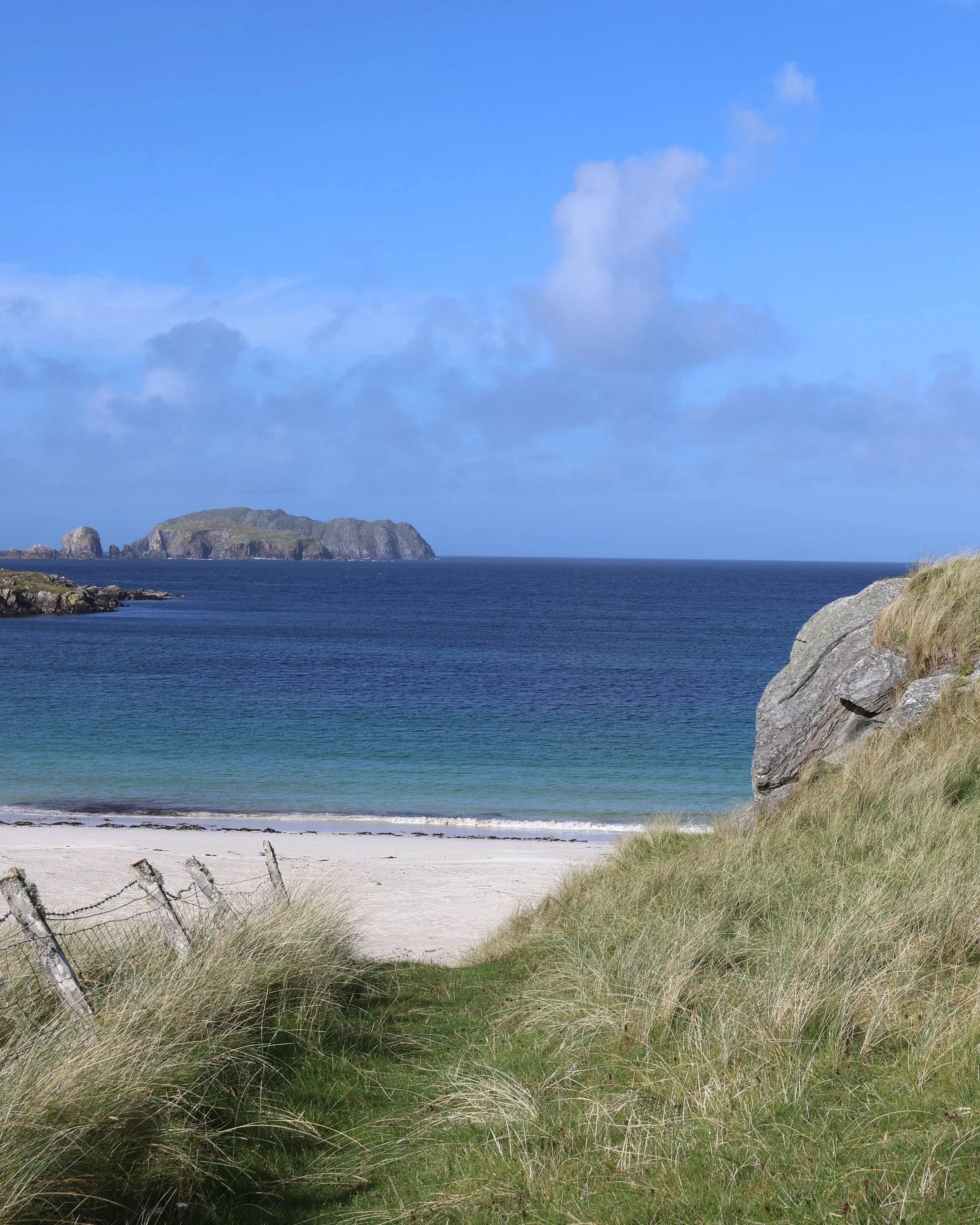
Travelling north through the Scottish mainland, passing vast stretches of open countryside, heather covers the hillsides in muted purples and browns. The further the journey continued, the more expansive the landscape became; wide skies, distant hills and long stretches of open land.
After spending a night just outside of Inverness, the journey continued up to Ullapool, where the ferry crossed towards Stornoway. The crossing was choppy with strong winds, offering the first glimpse of the wild and changeable weather that would become such a defining part of the journey.
The Harris Tweed Authority located in Stornoway provided a fascinating introduction to the history and heritage of Harris Tweed. They host hour long presentations, in which they explore the origins of the cloth, it's development and the reasons behind it's reputation, alongside a brief demonstration of the processes involved in it's production.
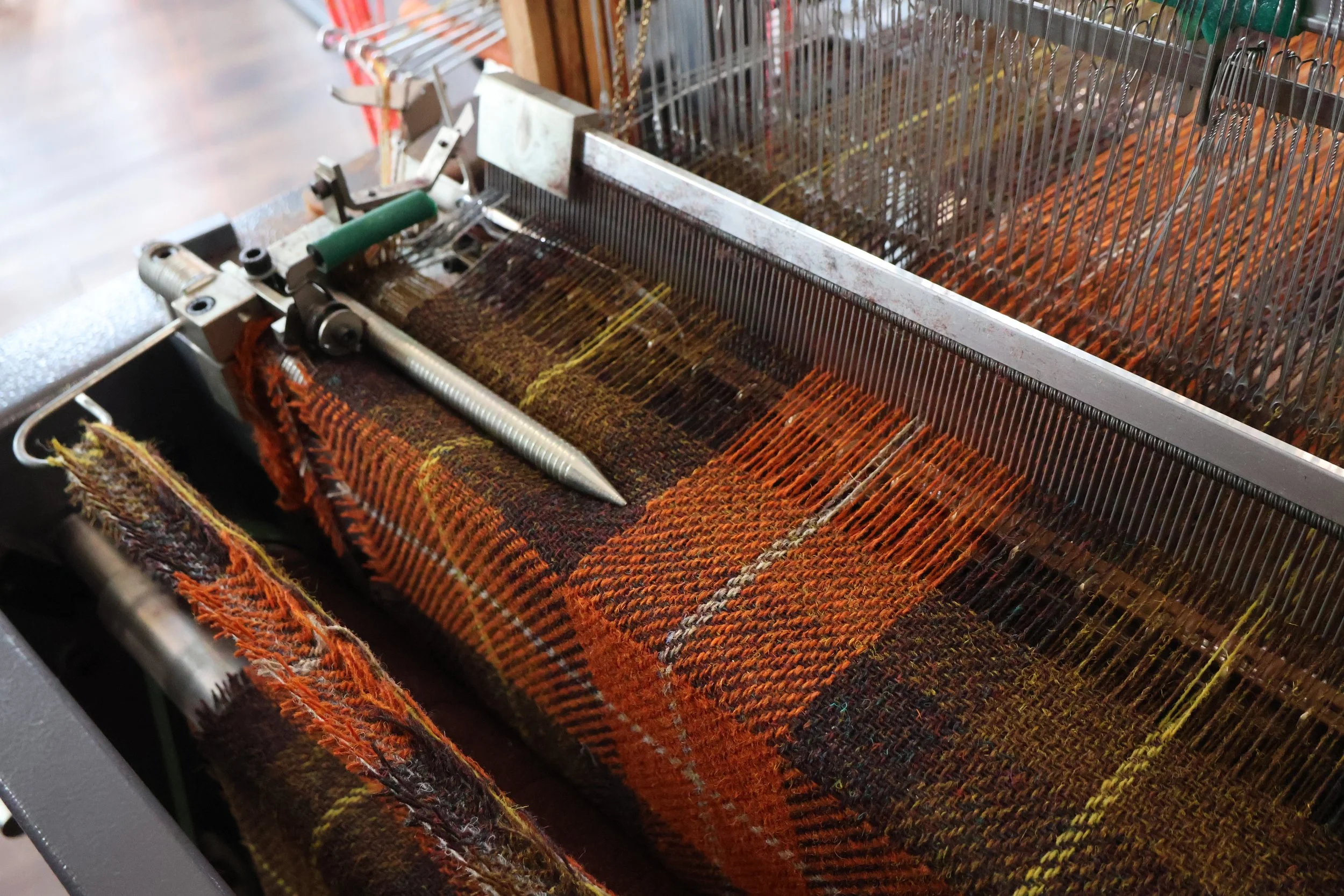
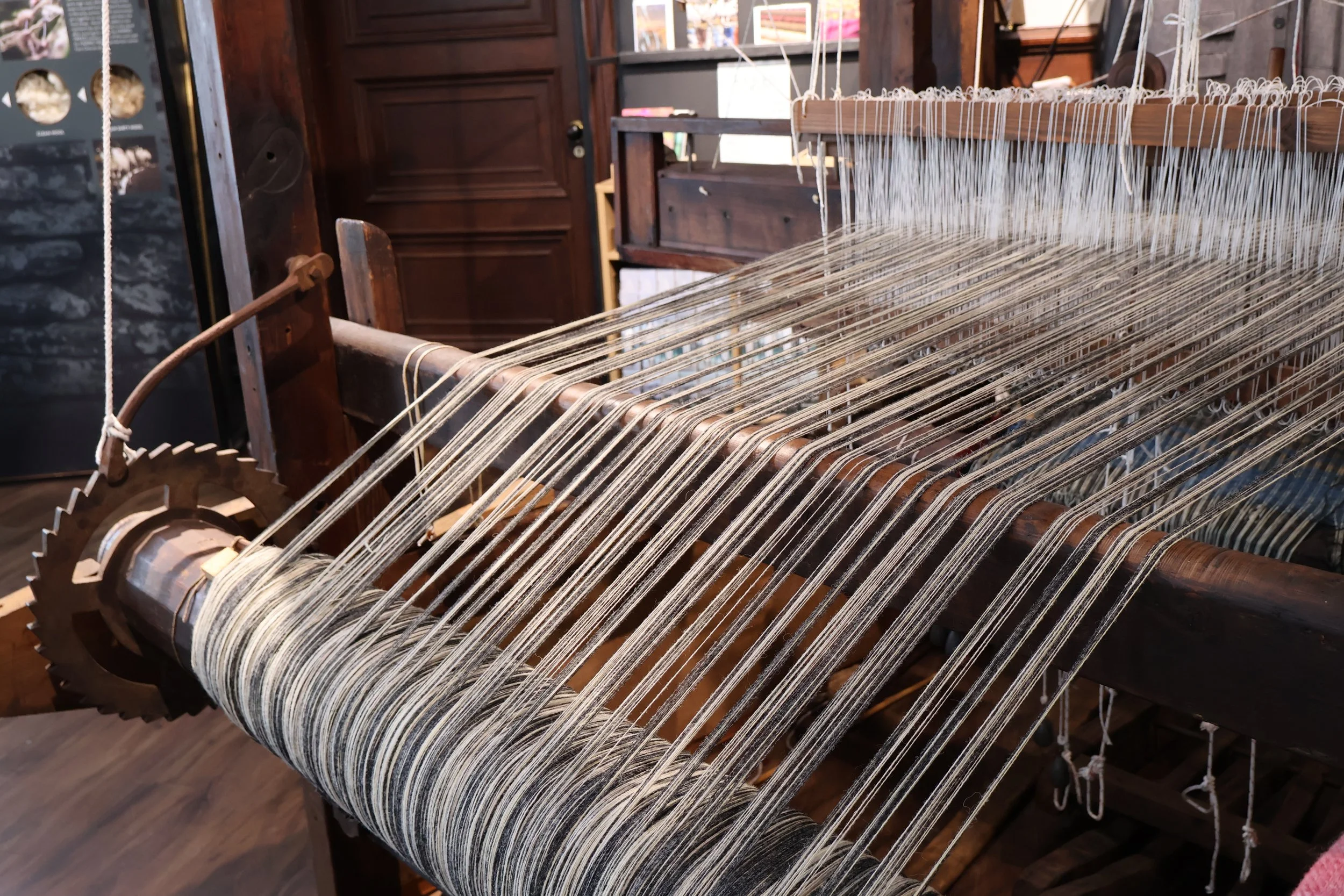
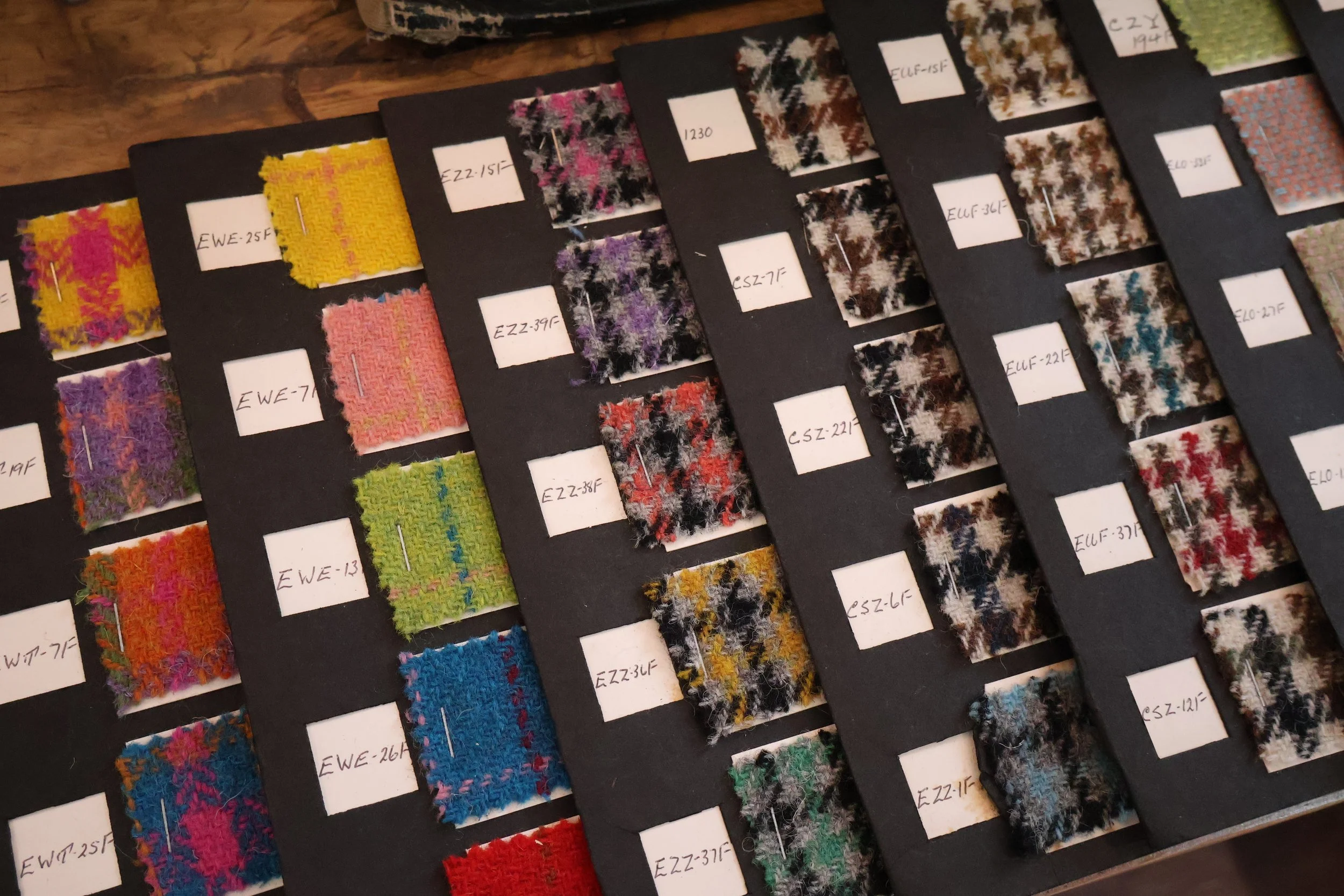
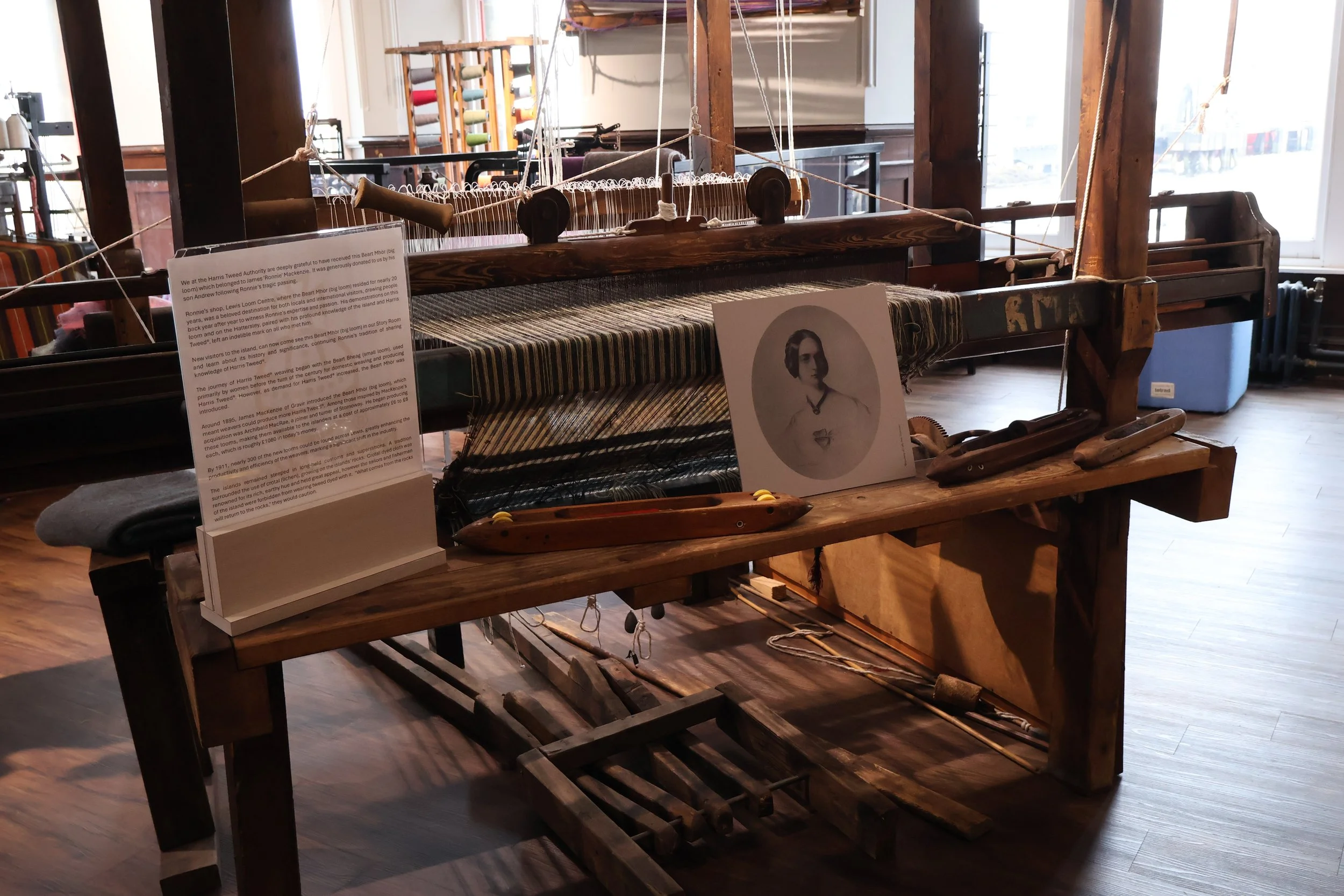
There is something really special about seeing a material so closely connected to its surroundings. Harris Tweed is not just produced on the islands; its identity is deeply rooted in communities, landscapes and traditions of the Outer Hebrides.
For the cloth to be authentically produced as Harris Tweed, it must be woven by an approved weaver at the weaver’s home, using pure wool, with strict conditions surrounding its production. A workshop with more than two looms is actually considered a small factory rather than an individual weaving workshop, and so this is not allowed!
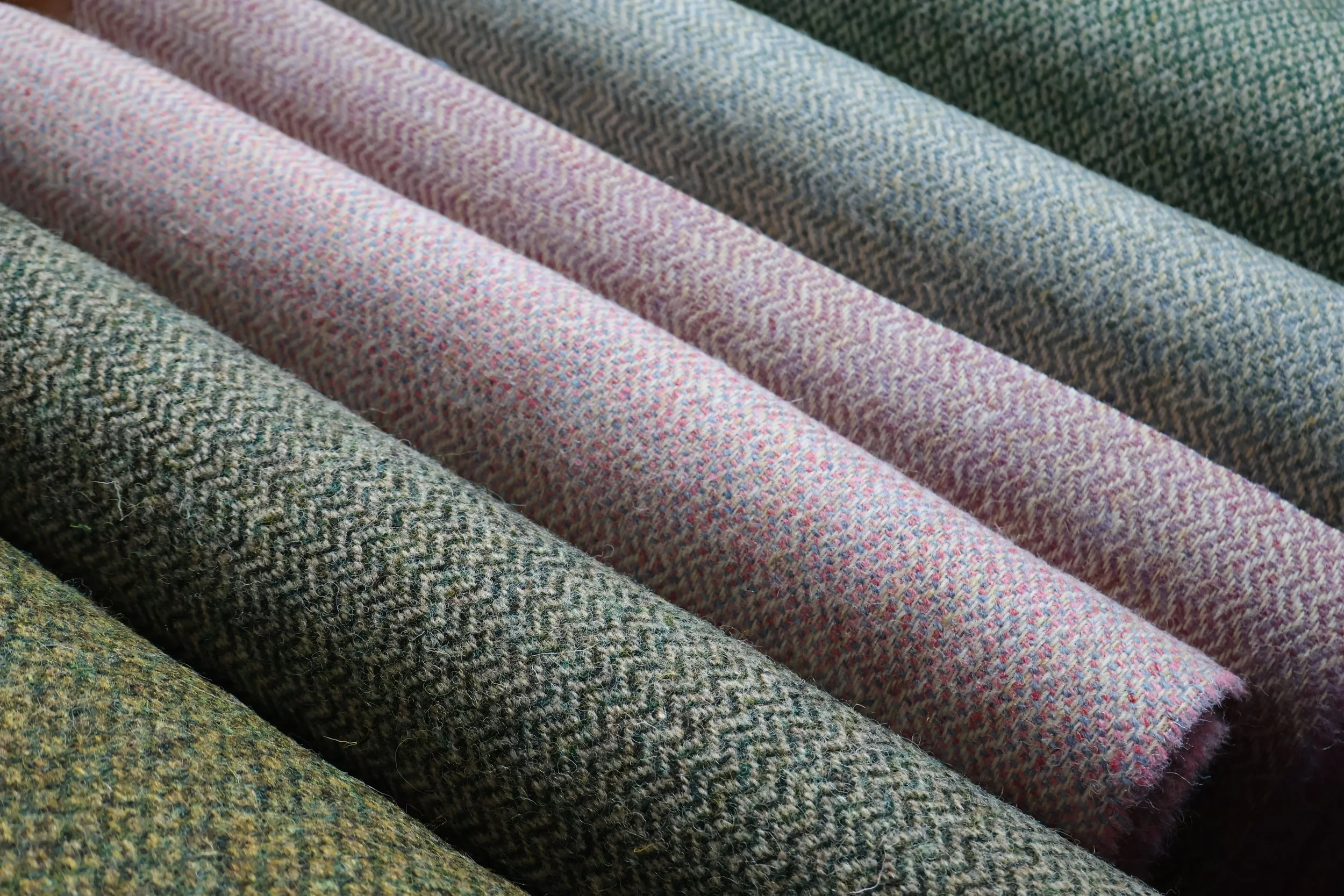
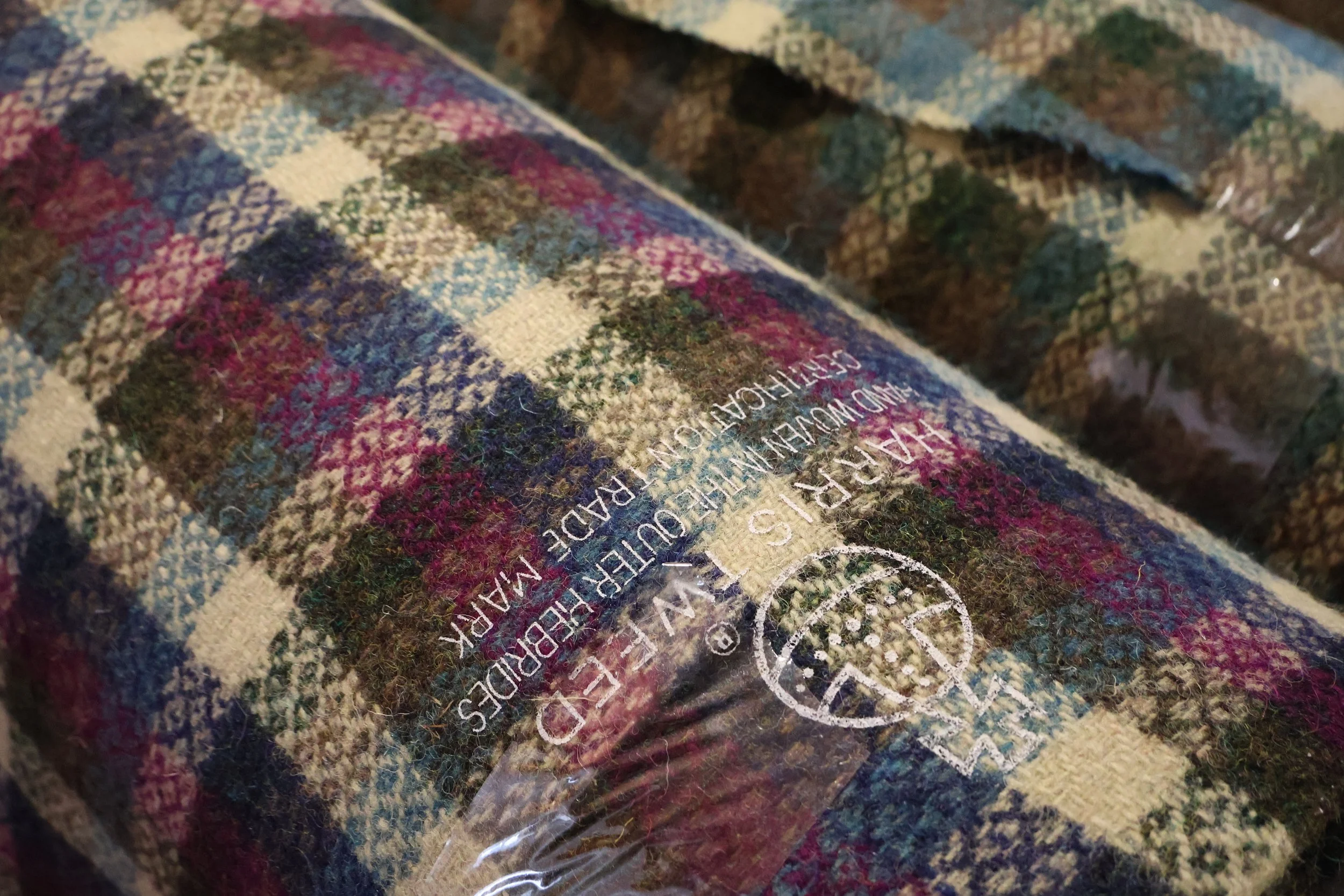
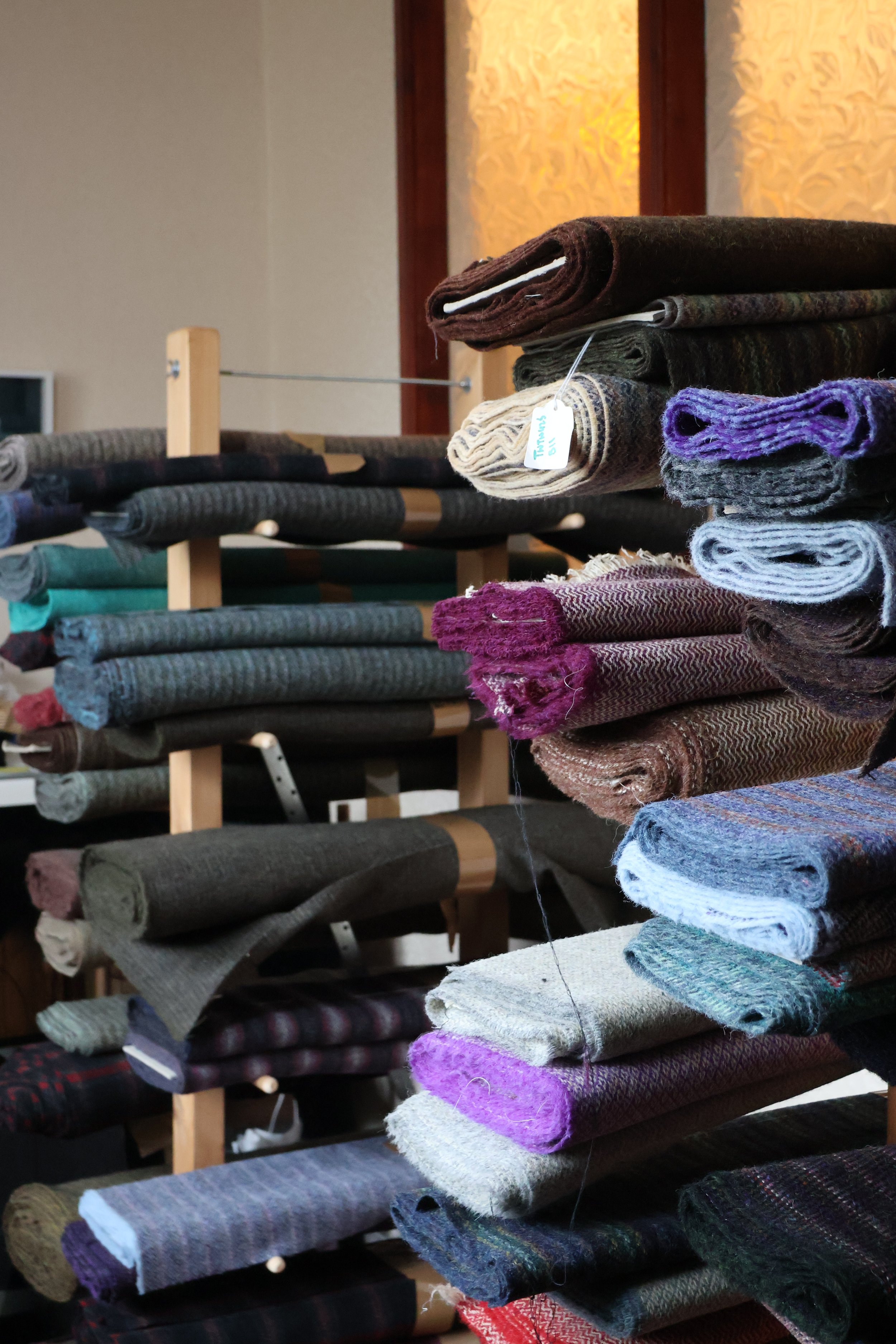
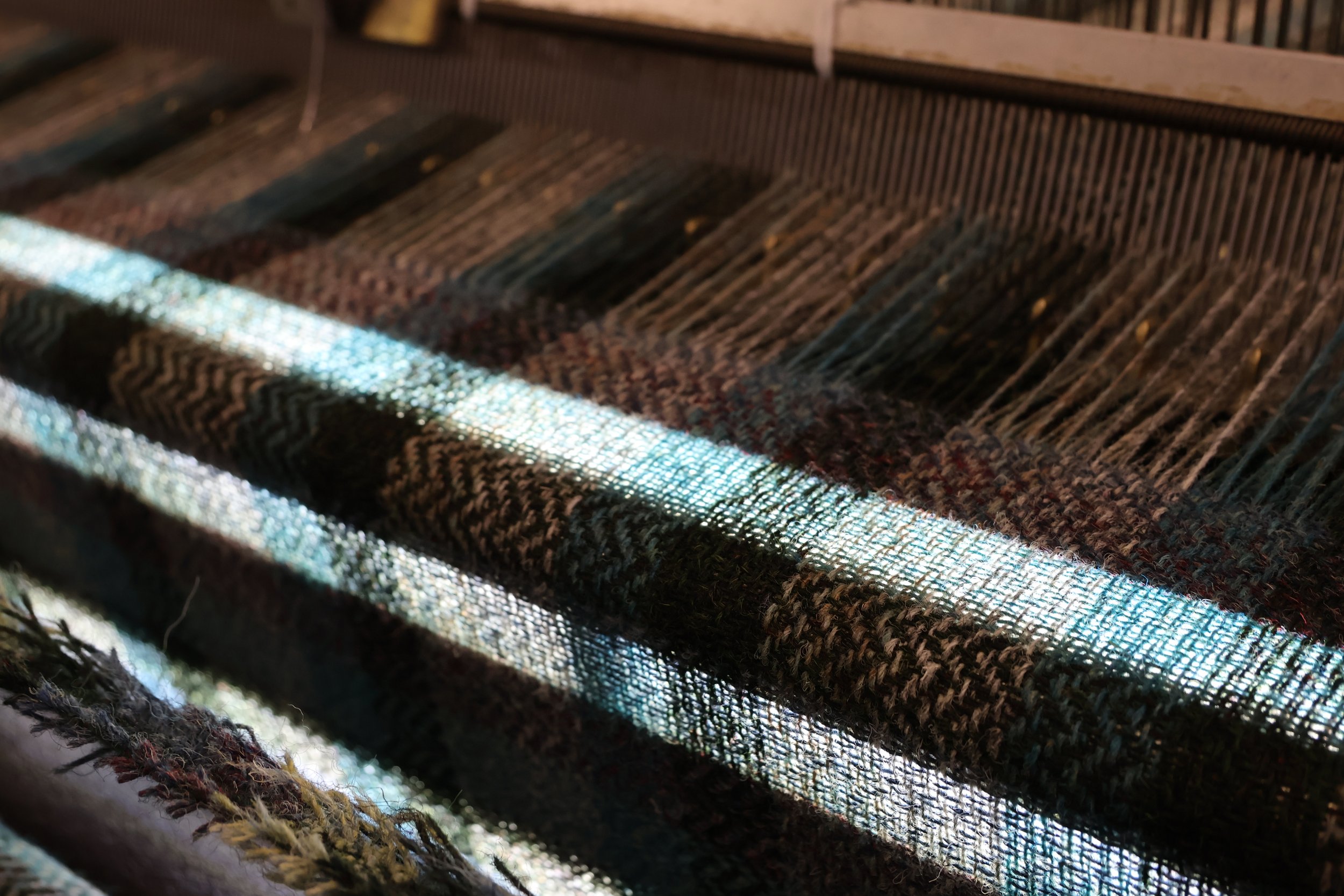
A visit to ‘A Harris Tweed Weaver’, owned and run by Gordon, offered an opportunity to see this craft in practice. The workshop shelves were lined with cones of 100% wool, their colours naturally echoing the landscape outside – deep blues, muted greens, earthy browns and weathered tones.
Two different cloths were being woven on one loom – one in a herringbone weave and the other a tappet weave. The colours moved between different shades of blue, with a small flash of purple woven through. Seeing the yarns become cloth was a reminder of how much thought, skill and precision goes into a piece of Harris Tweed.
The workshop also held a collection of finished tweeds waiting to go their next stage. Each cloth offered a different interpretation of colour and pattern, demonstrating how the landscape can be translated into different combinations of tone and texture.
Visit A Harris Tweed Weaver’s website here.
Further south along the east coast of Harris, a single-track road winds between rocky hills and open stretches of land, with sheep wandering freely across the roadside. Tucked away beside the coast is Clò Mòr, a Harris Tweed Exhibition. This self-guided exhibition allows time to move slowly through the displays, from the history of the material to garments and accessories demonstrating the many ways in which Harris Tweed can be used.
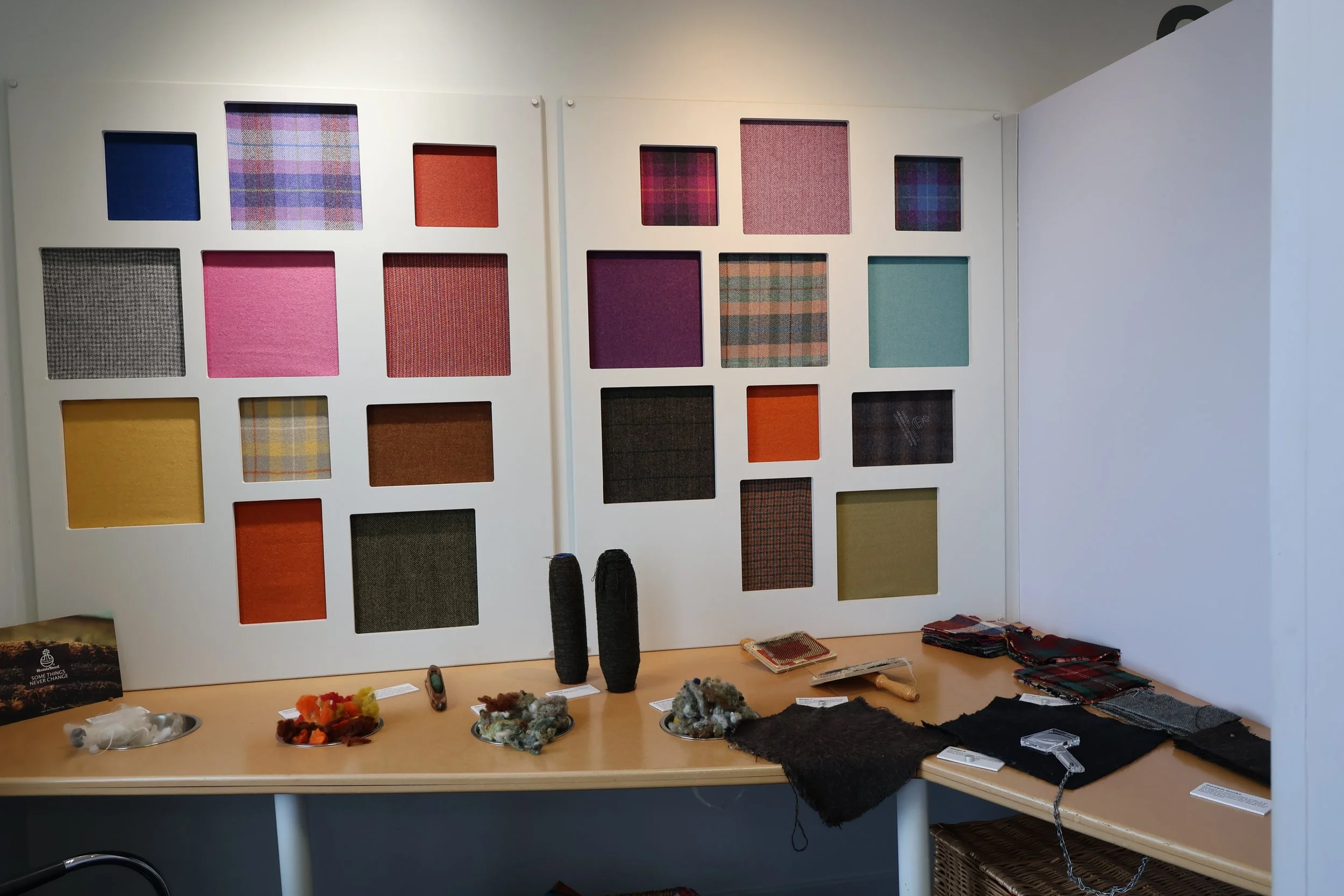
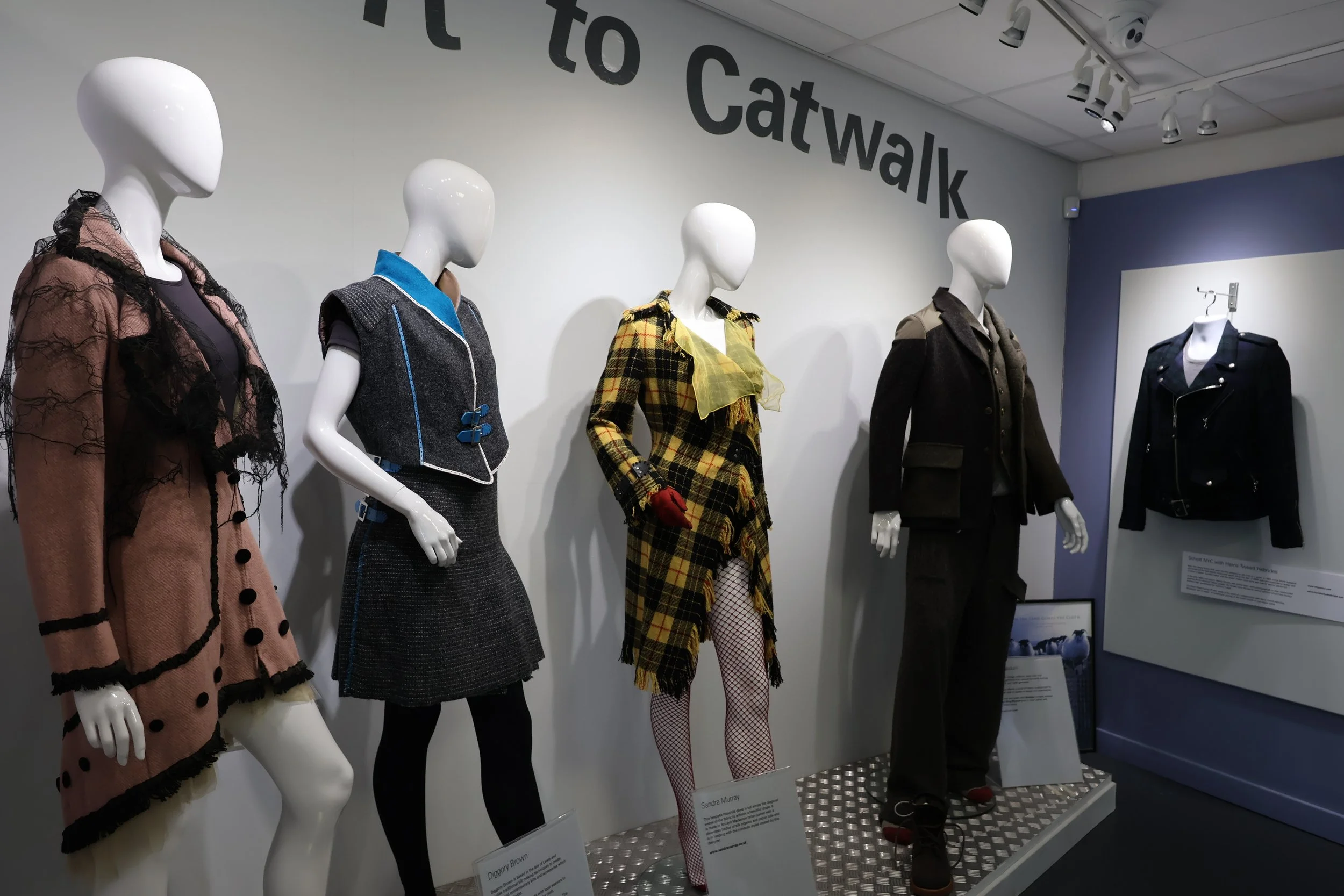
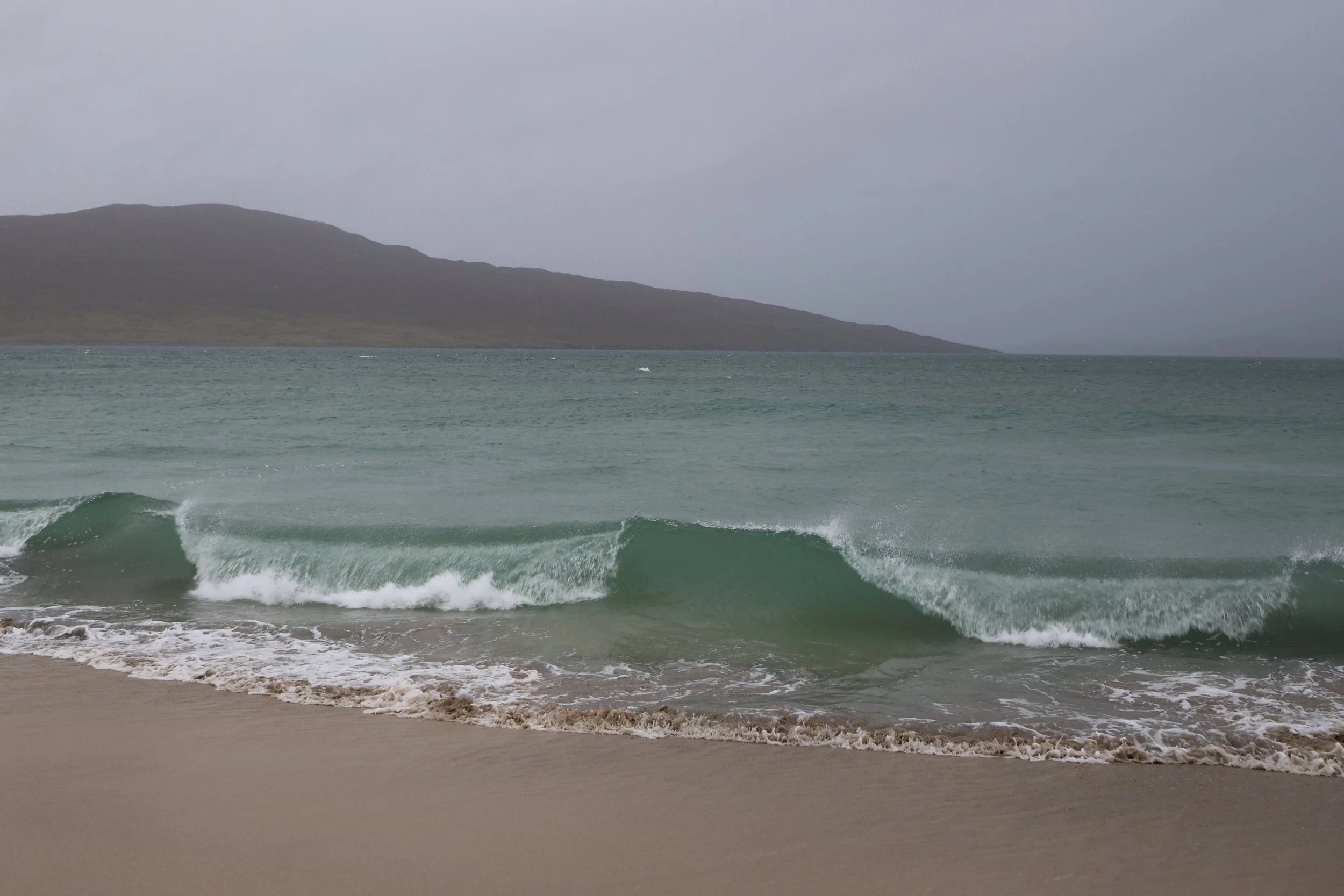
Outside, the waves move against the shoreline while the weather shifts overhead. The cloth, the landscape and the weather all share a sense of being shaped by the elements.
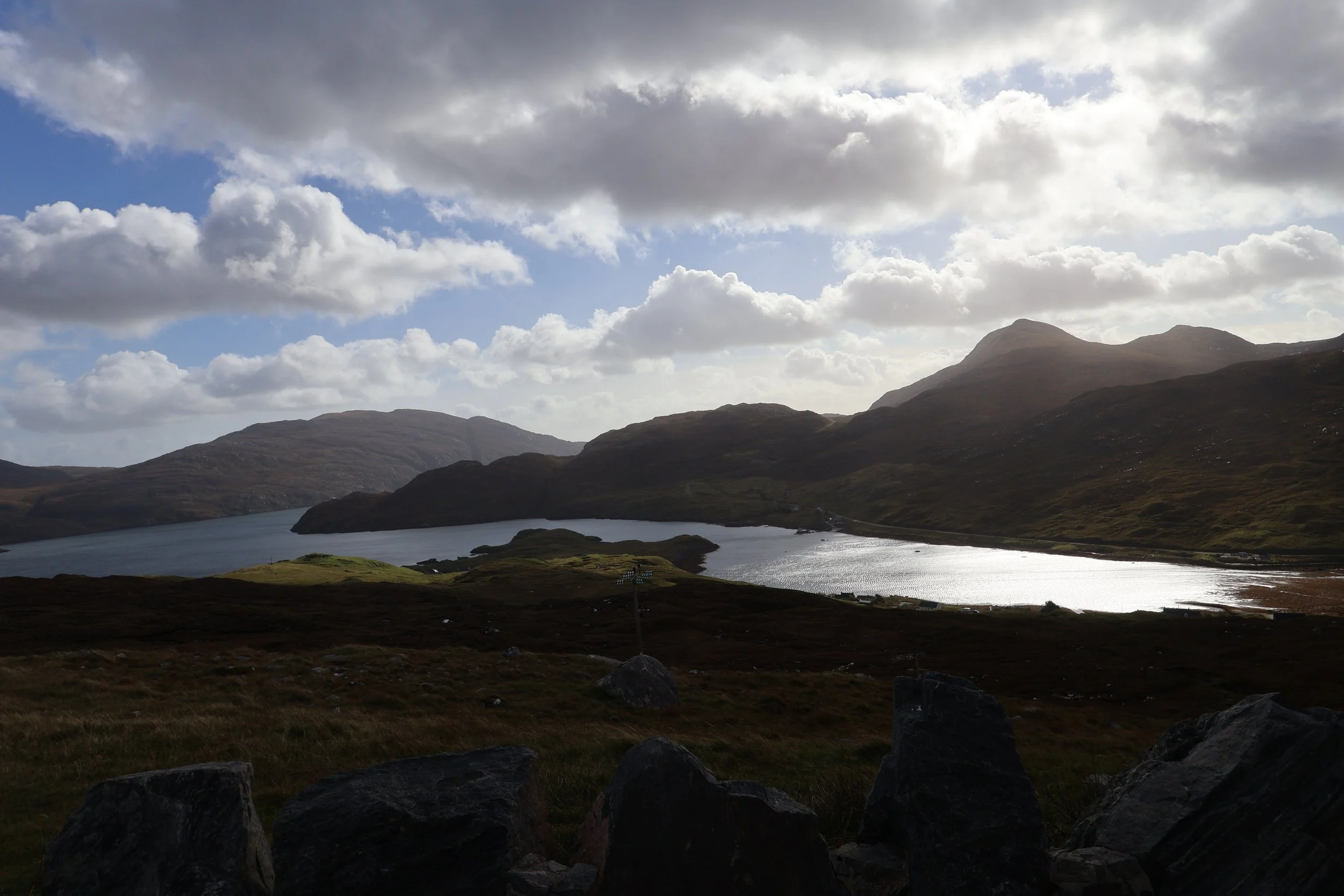
The landscape of Lewis is very distinctive in it's openness. Around Stornoway, trees have been reintroduced into areas of the town, with mature planting surrounding Lews Castle. Yet beyond the town, the scenery changed almost immediately. The horizon seems to stretch endlessly, and long roads can pass through miles of open country with barely another person in sight. Houses appear scattered across the land - some gathered together in small communities, others standing alone against the elements.
The sense of isolation is striking, but so is the richness of the landscape. Heather, grass and low growing plants emerge from the peat and rocky land. Grey skies deepen the greens and browns of the land, while moments of sun can transform it into something much brighter.
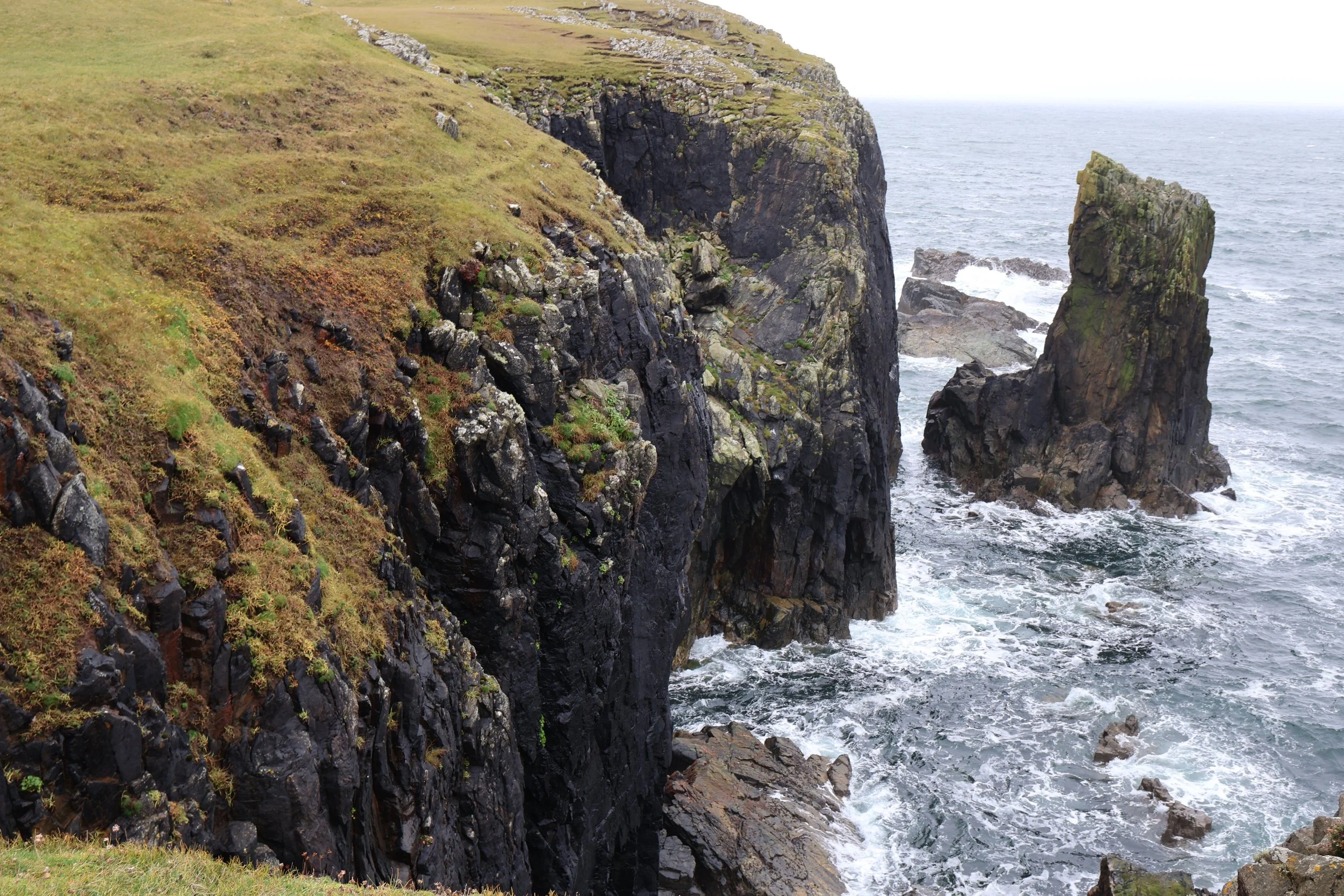
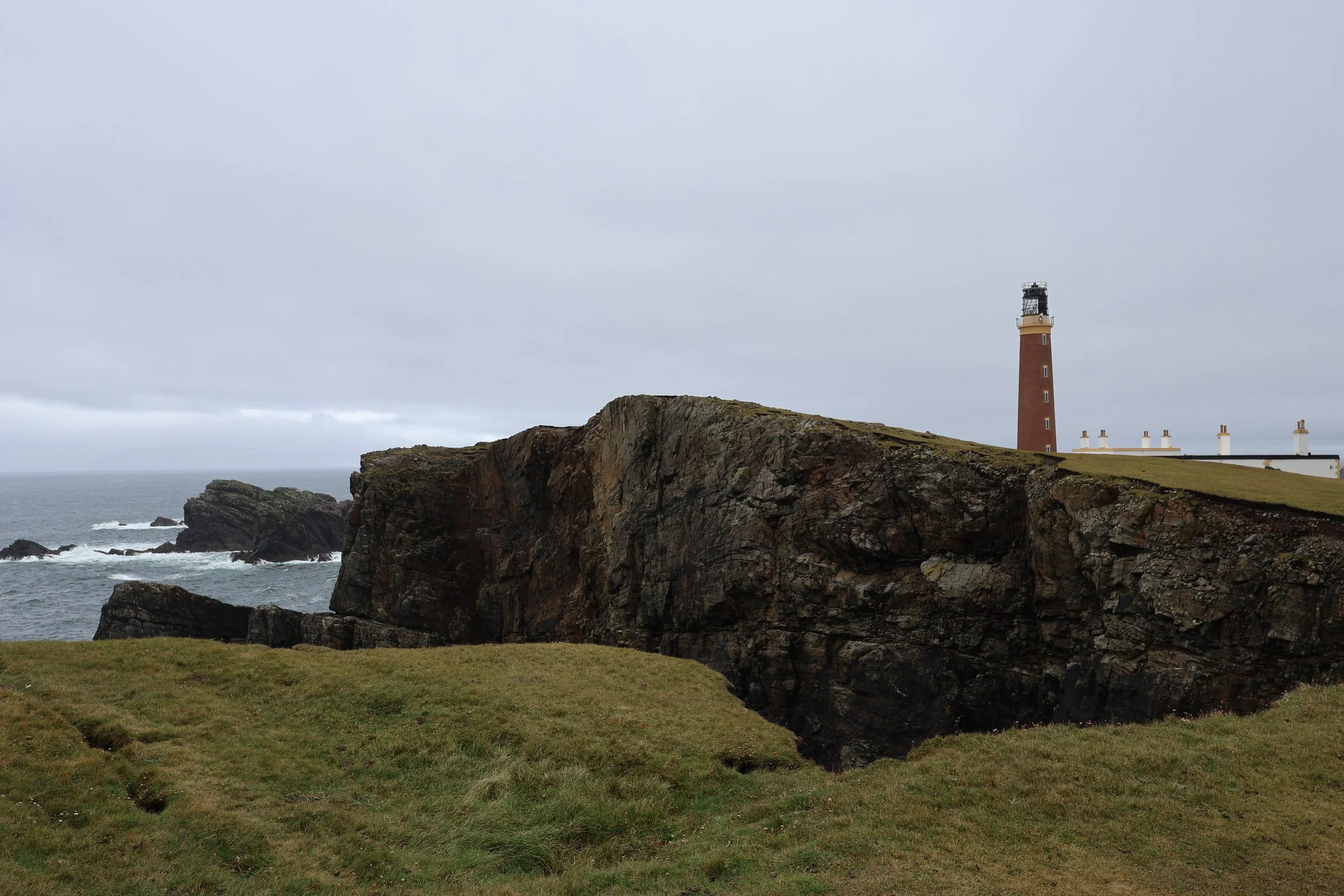
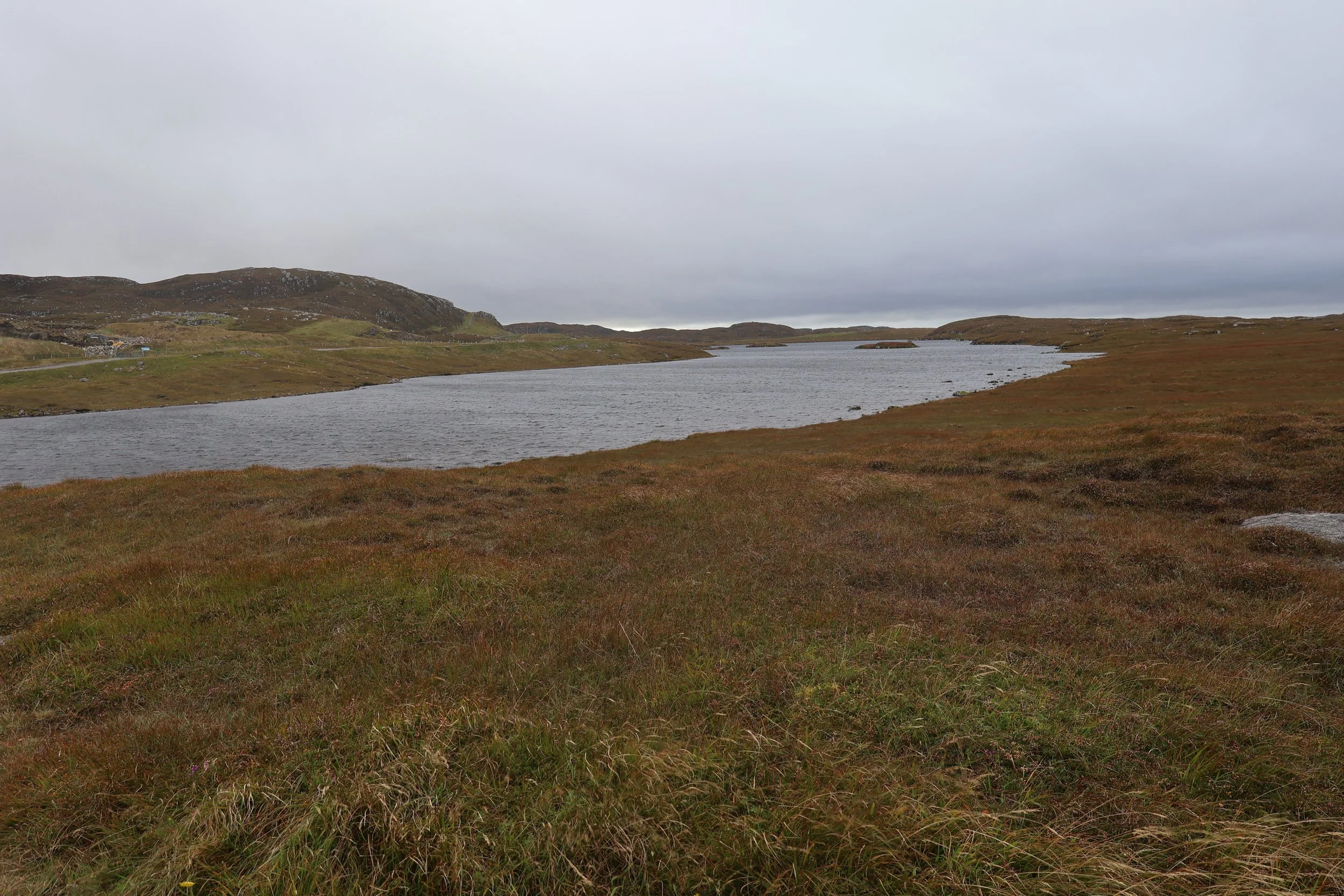
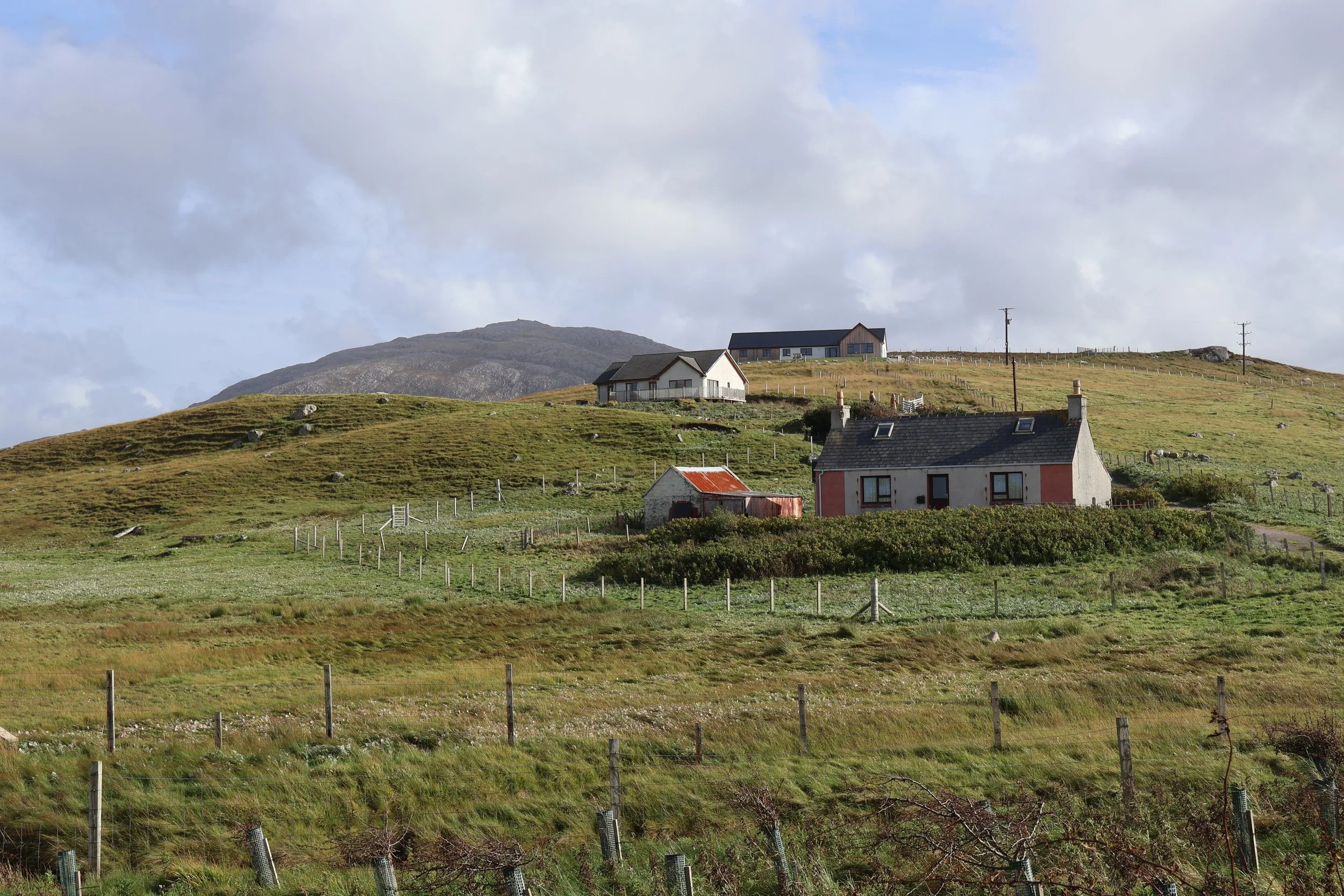
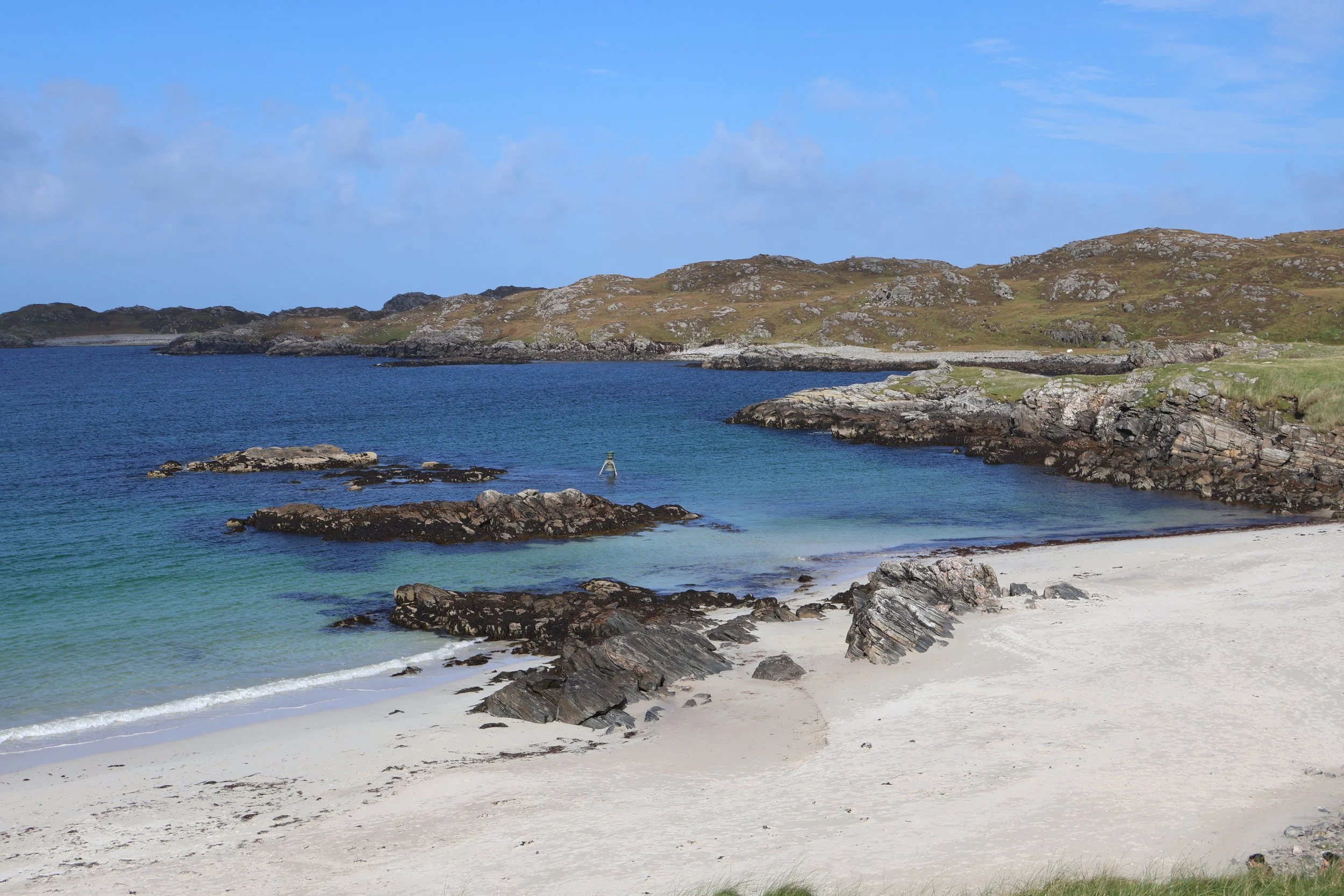
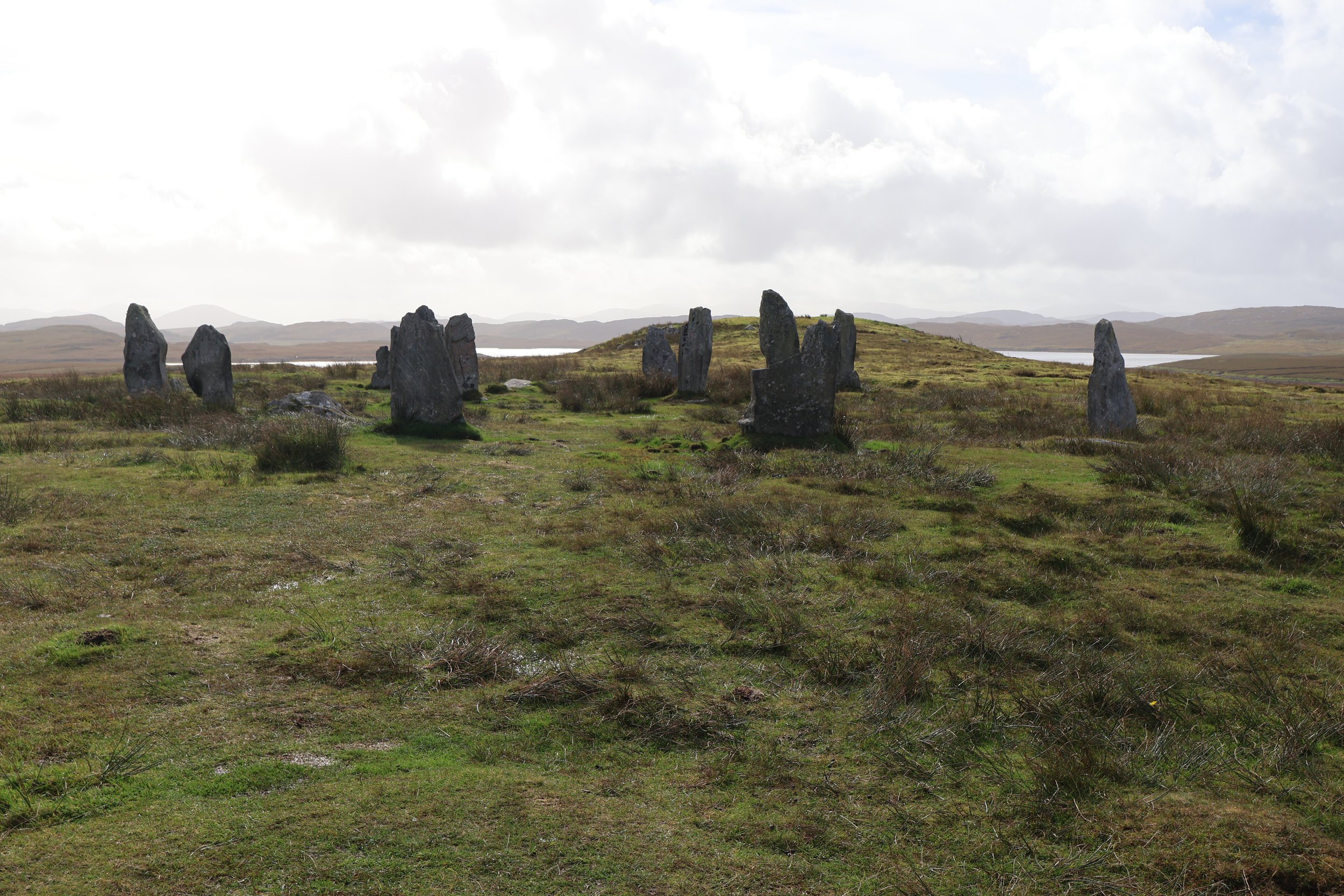
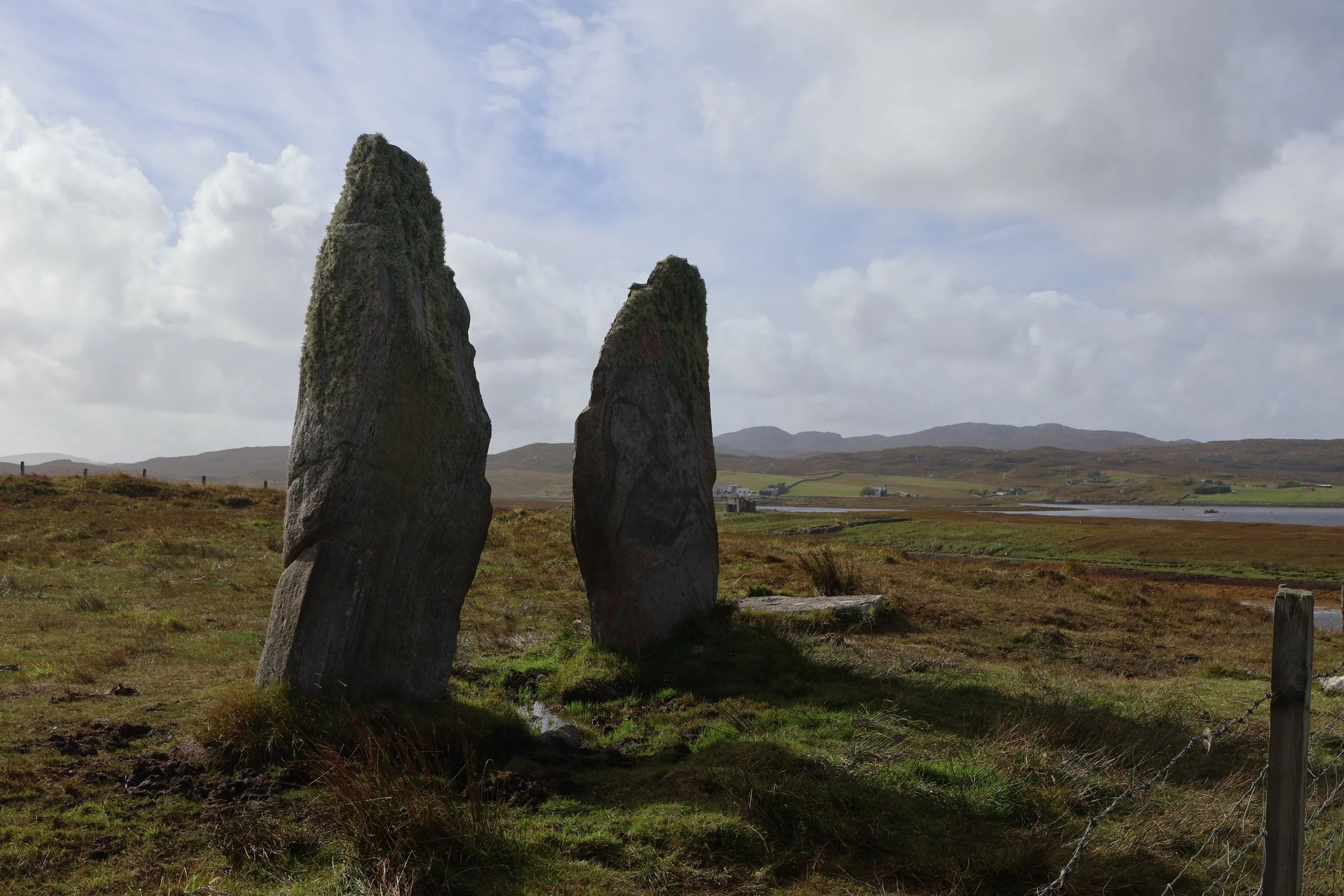
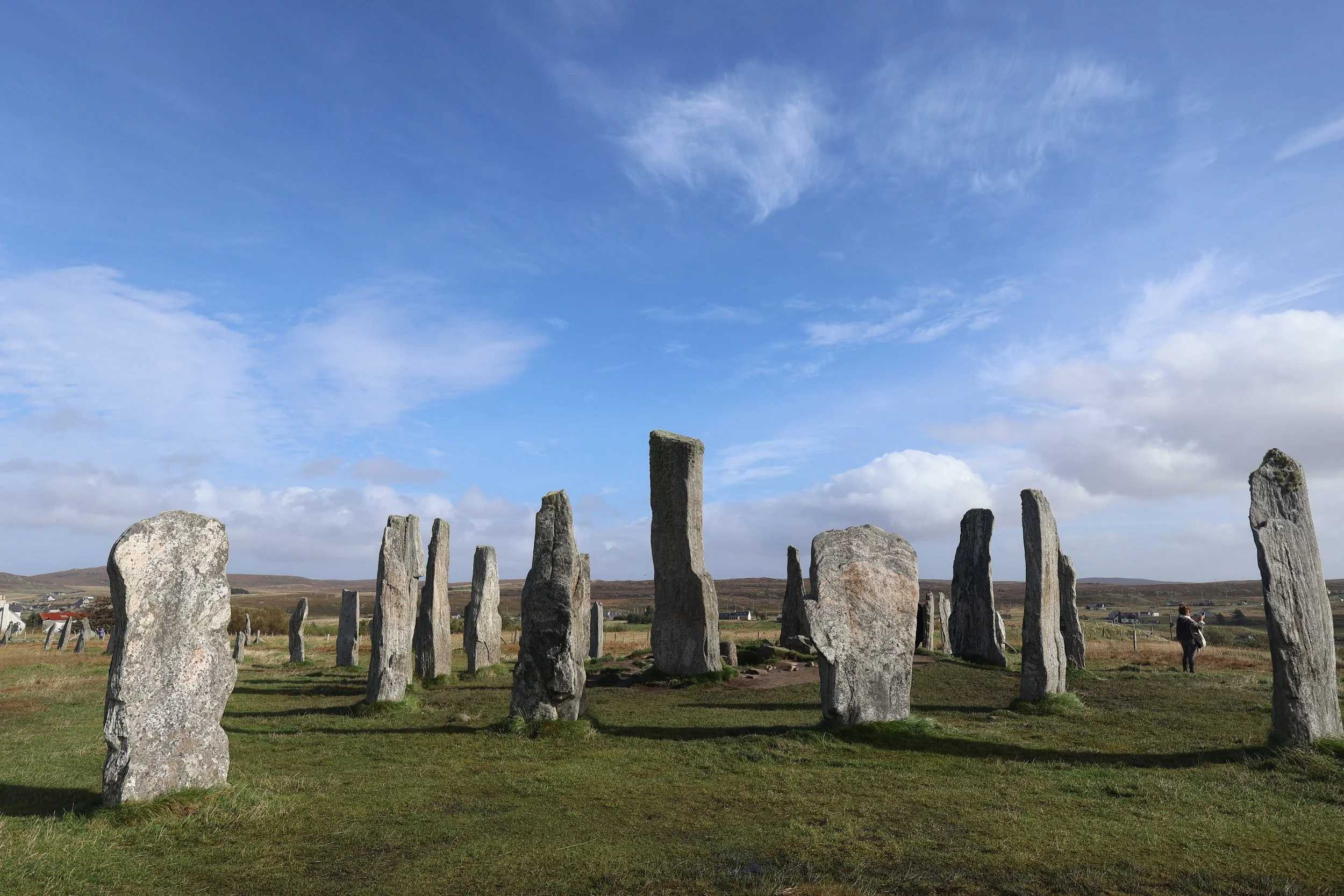
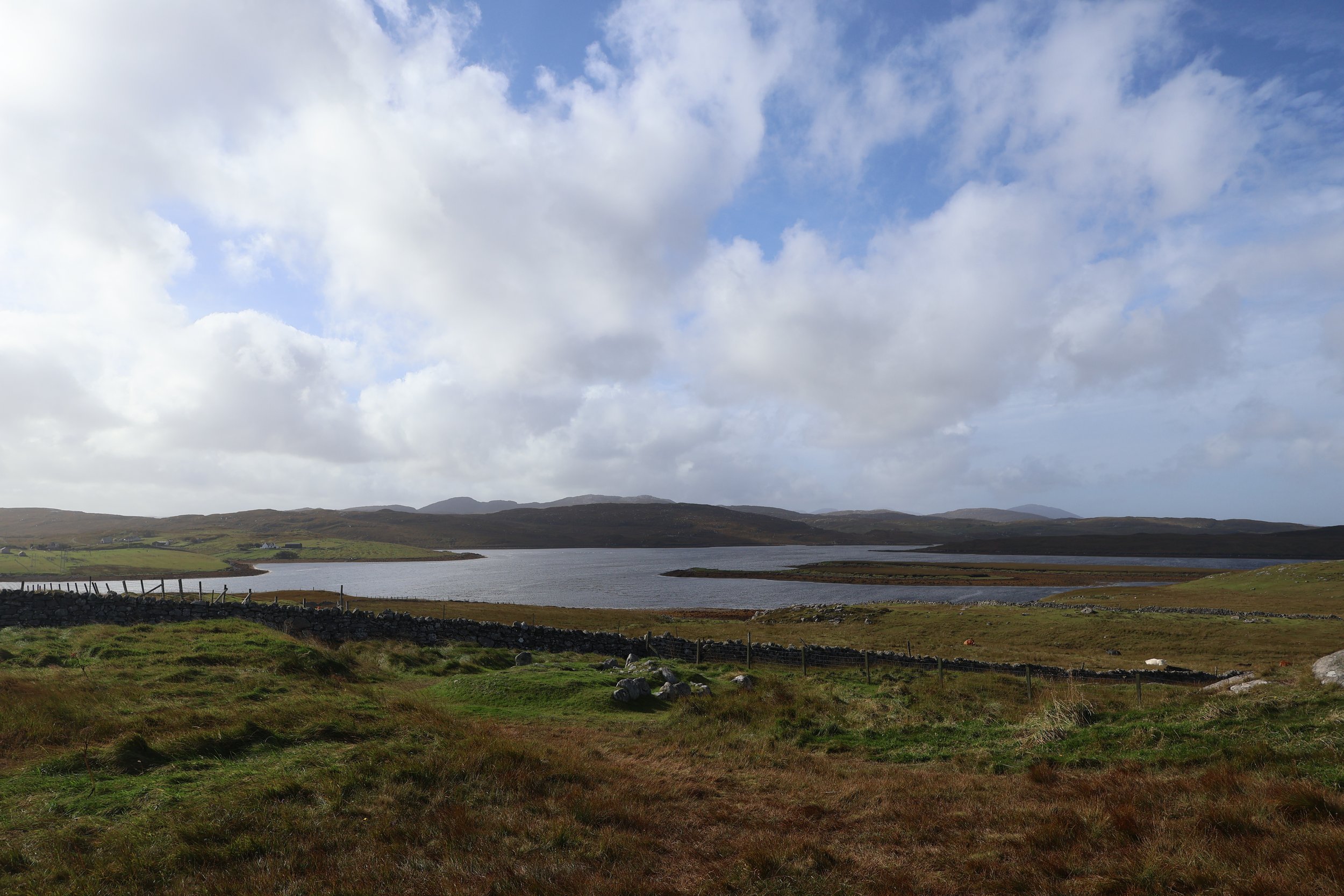
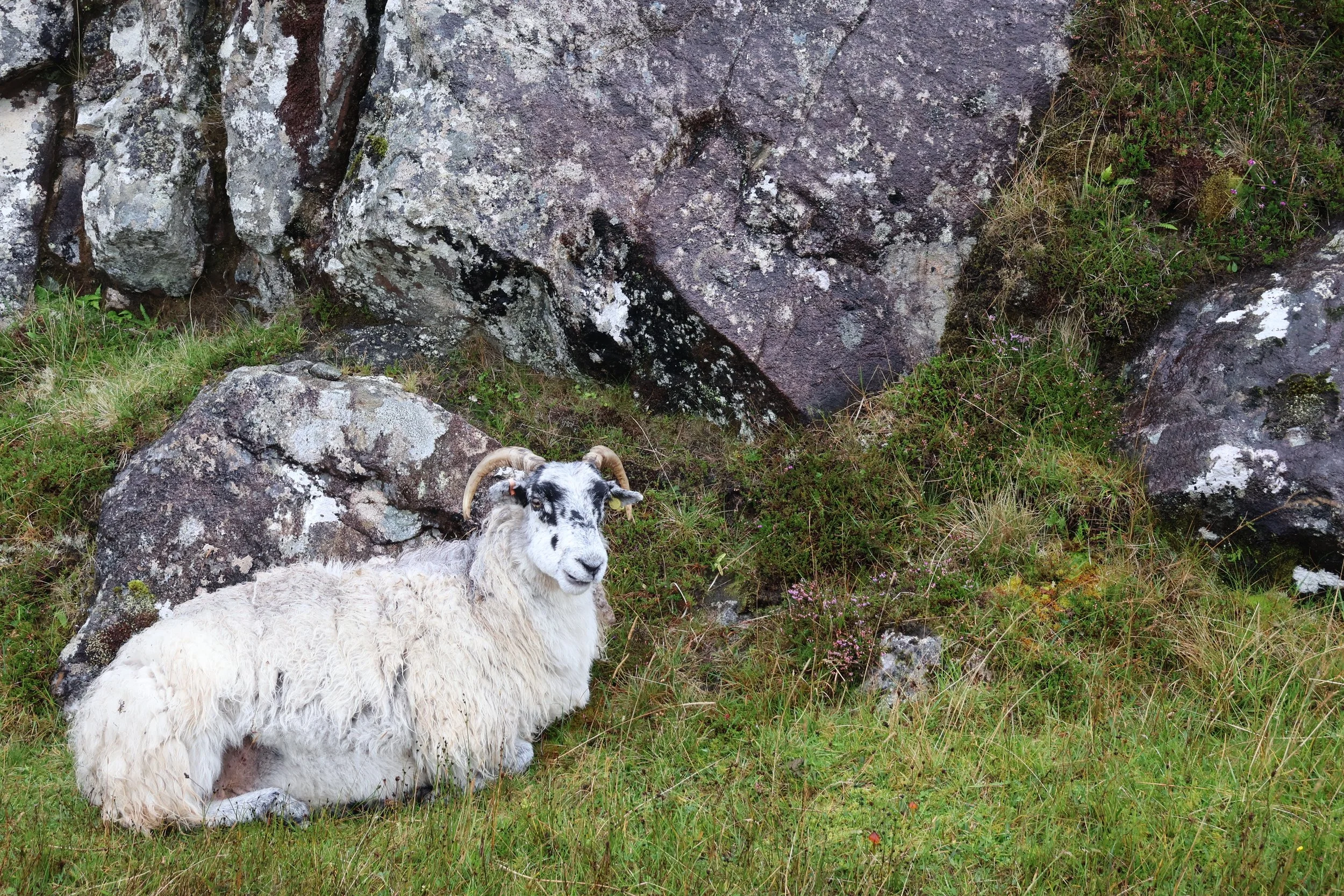
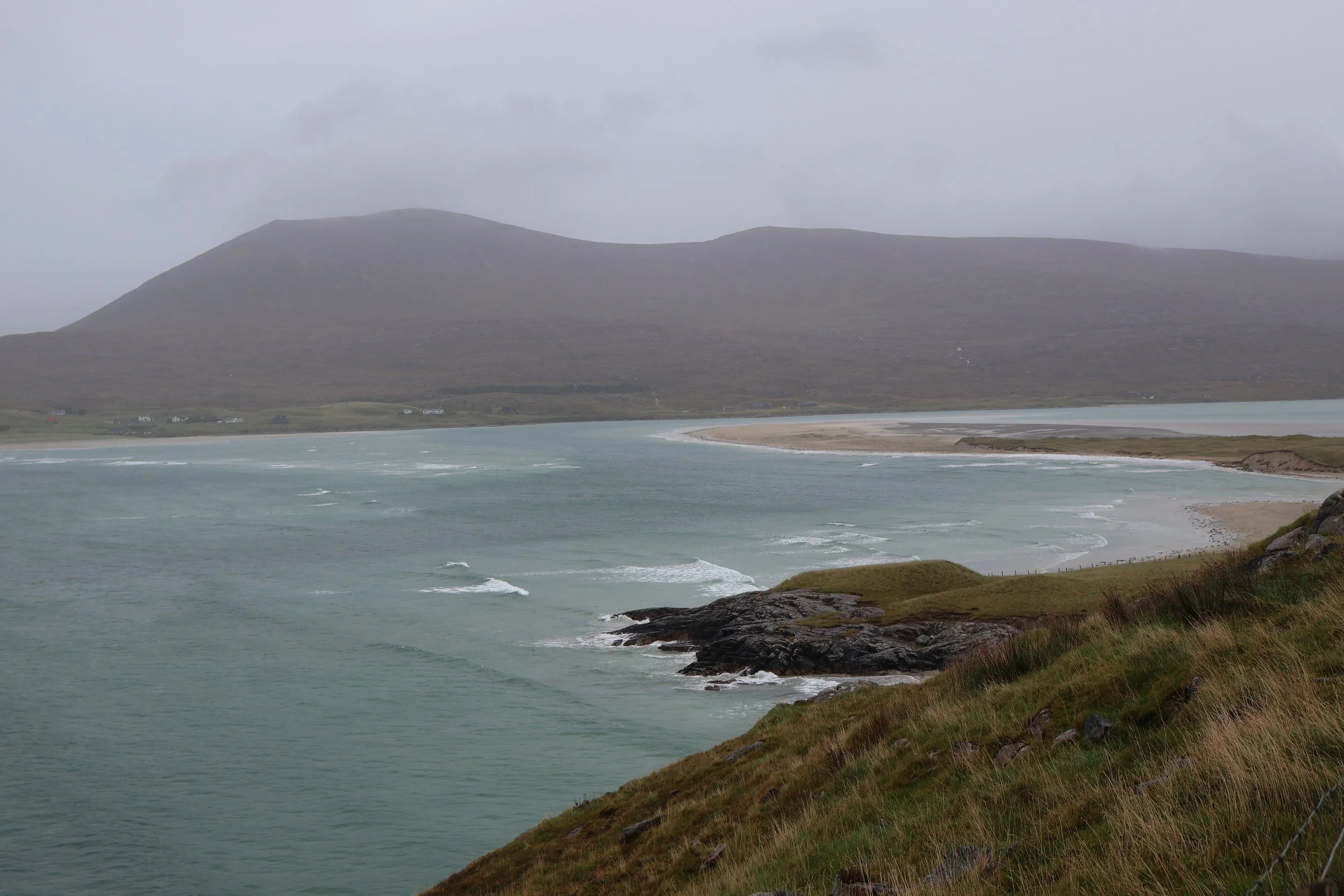
Harris is totally different in character. The land becomes more dramatic and mountainous, with steep hills rising above lochs and winding roads. Sheep move freely across the landscape, often appearing unexpectedly on and beside the roads.
The weather is constantly shifting. Quiet stretches of sunshine can change to heavy rain within minutes, with clouds moving quickly across the hills. At times the sky seems to open completely, while at others the wind is strong enough to make the rain almost horizontal.
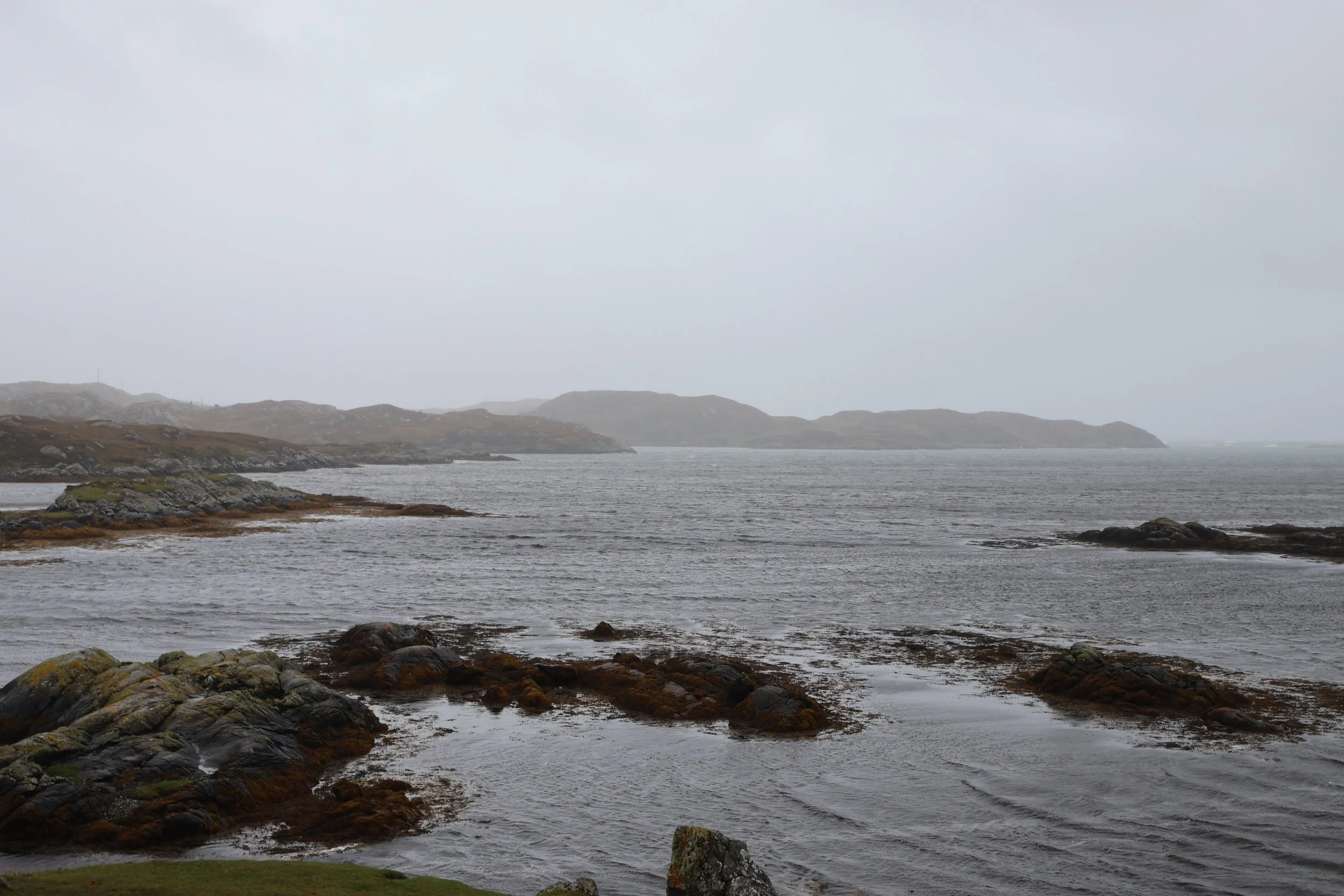
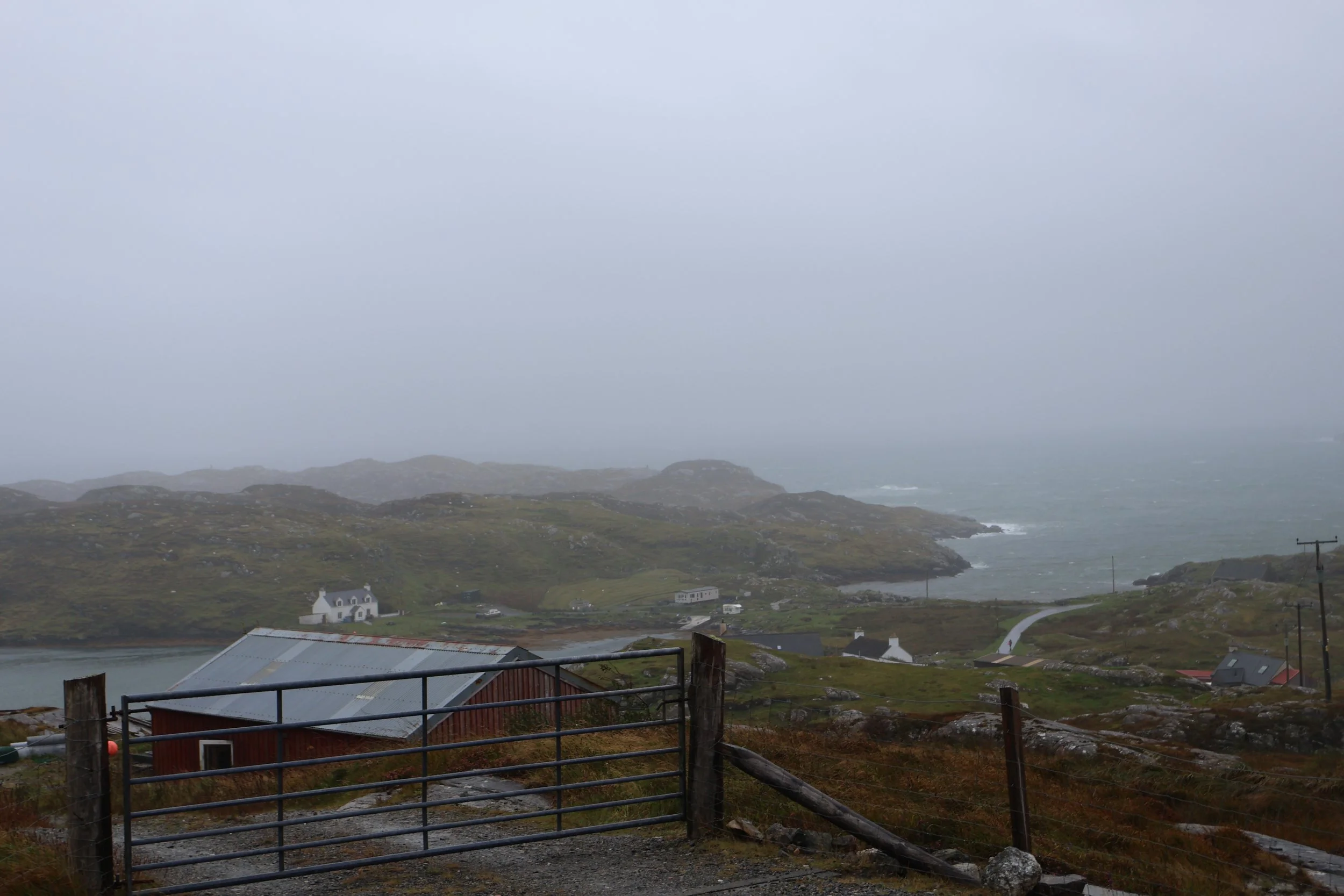
Further south on North Uist, a visit to the Birlinn Yarn Company on Berneray offered the opportunity to meet Meg and explore her studio. I was already familiar with Birlinn Yarn through research undertaken in my honours project, ‘In the Heather’, making the visit particularly meaningful.
The company places a strong emphasis on ethical and considered production. Working closely with her sheep, Meg knows where the fleece comes from and gives her a direct understanding of her animals, materials and processes behind the yarn.
Inside, the studio was warm and inspirational, with pattern books, knitted garments and materials gathered in the space. Beyond the window, the weather was a complete contrast. Rain was pouring sideways against the wind, creating a dramatic view across the water.
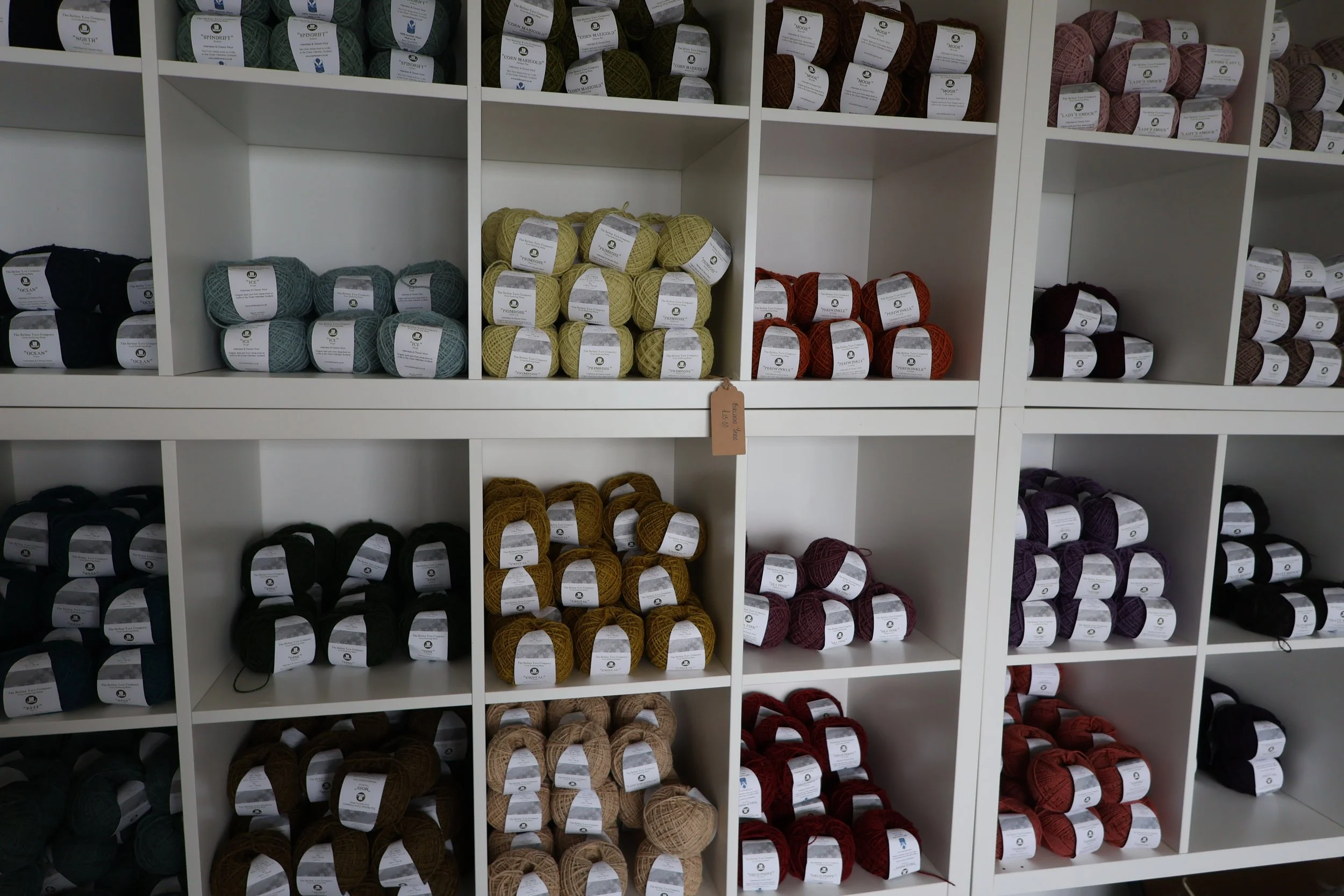
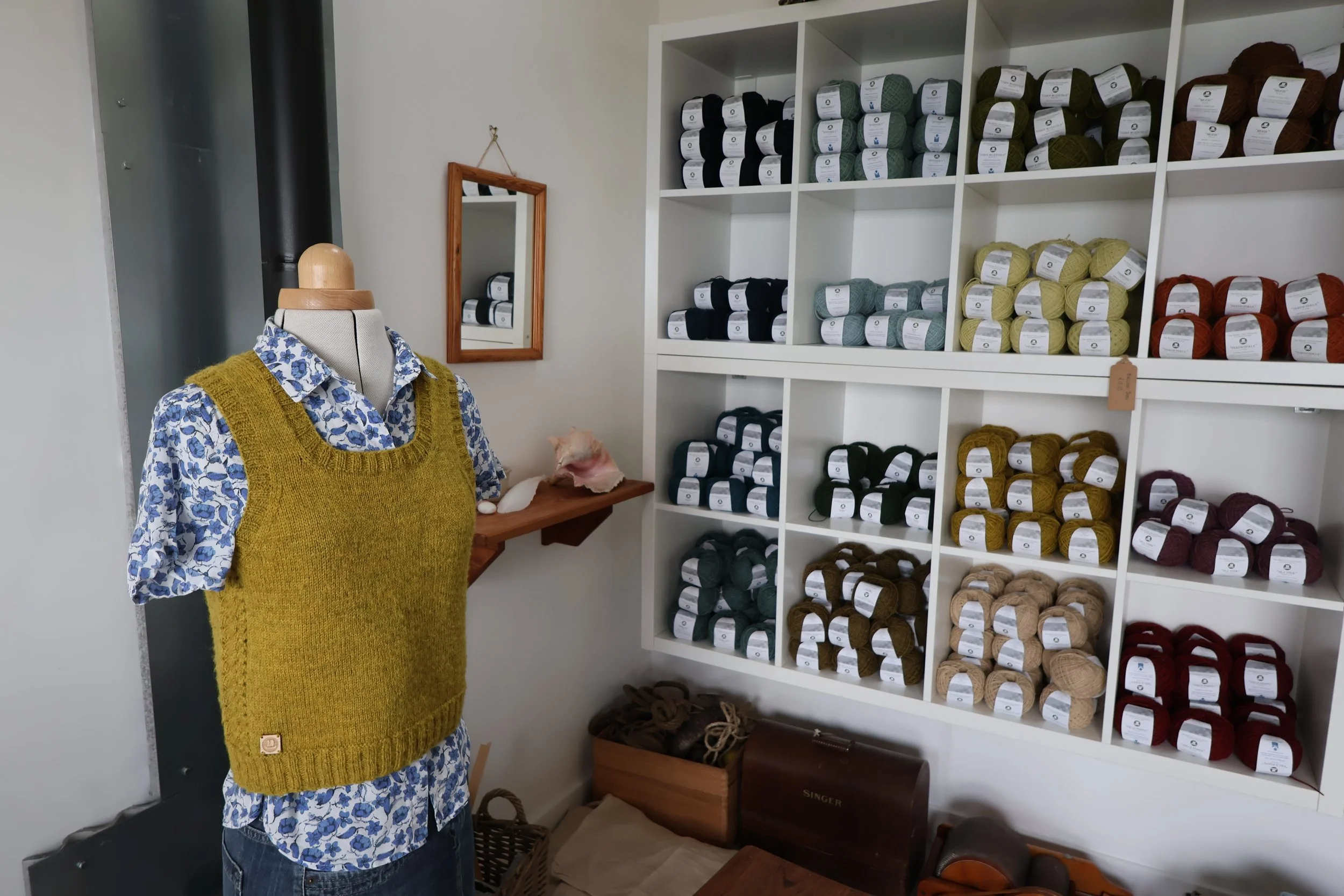
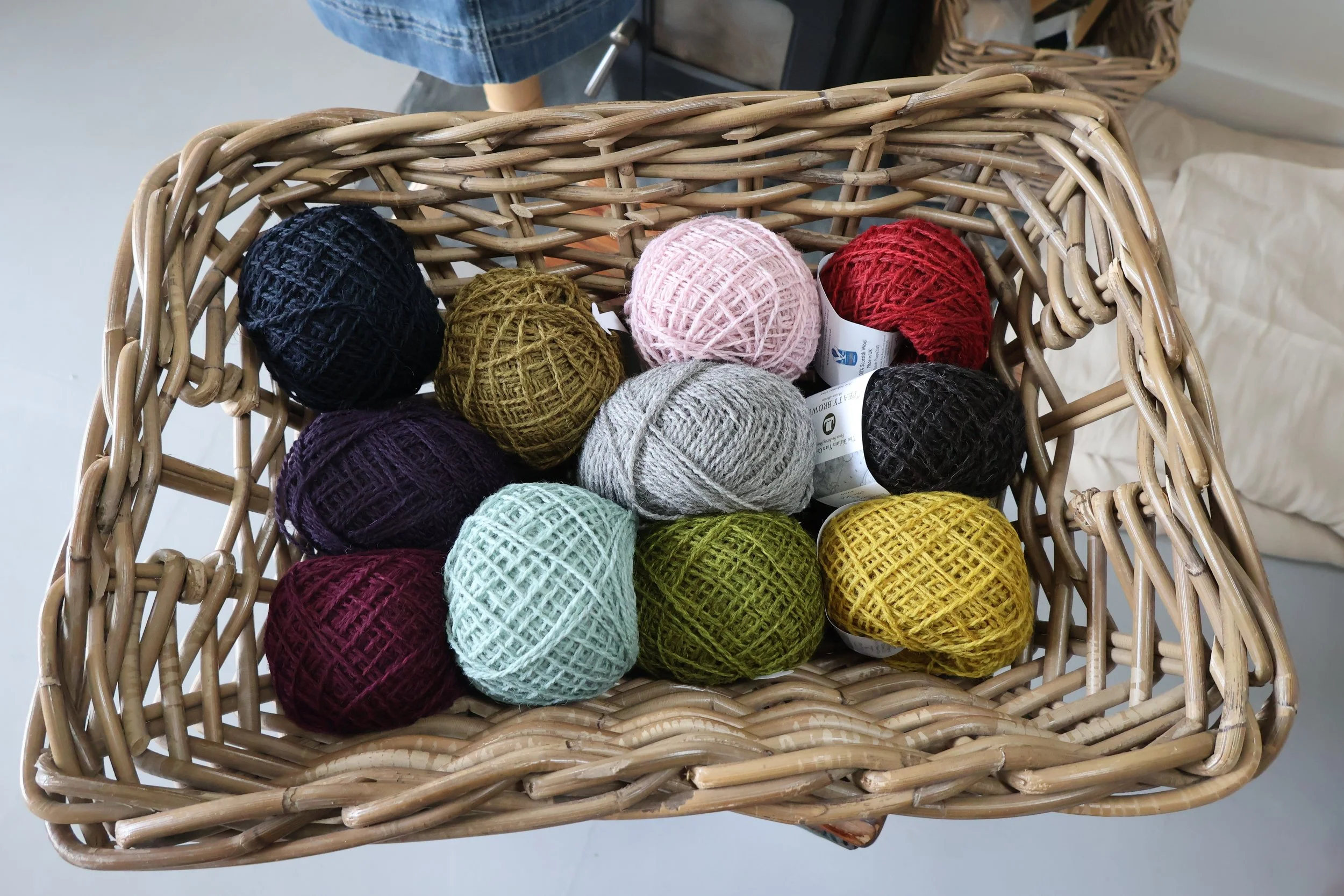
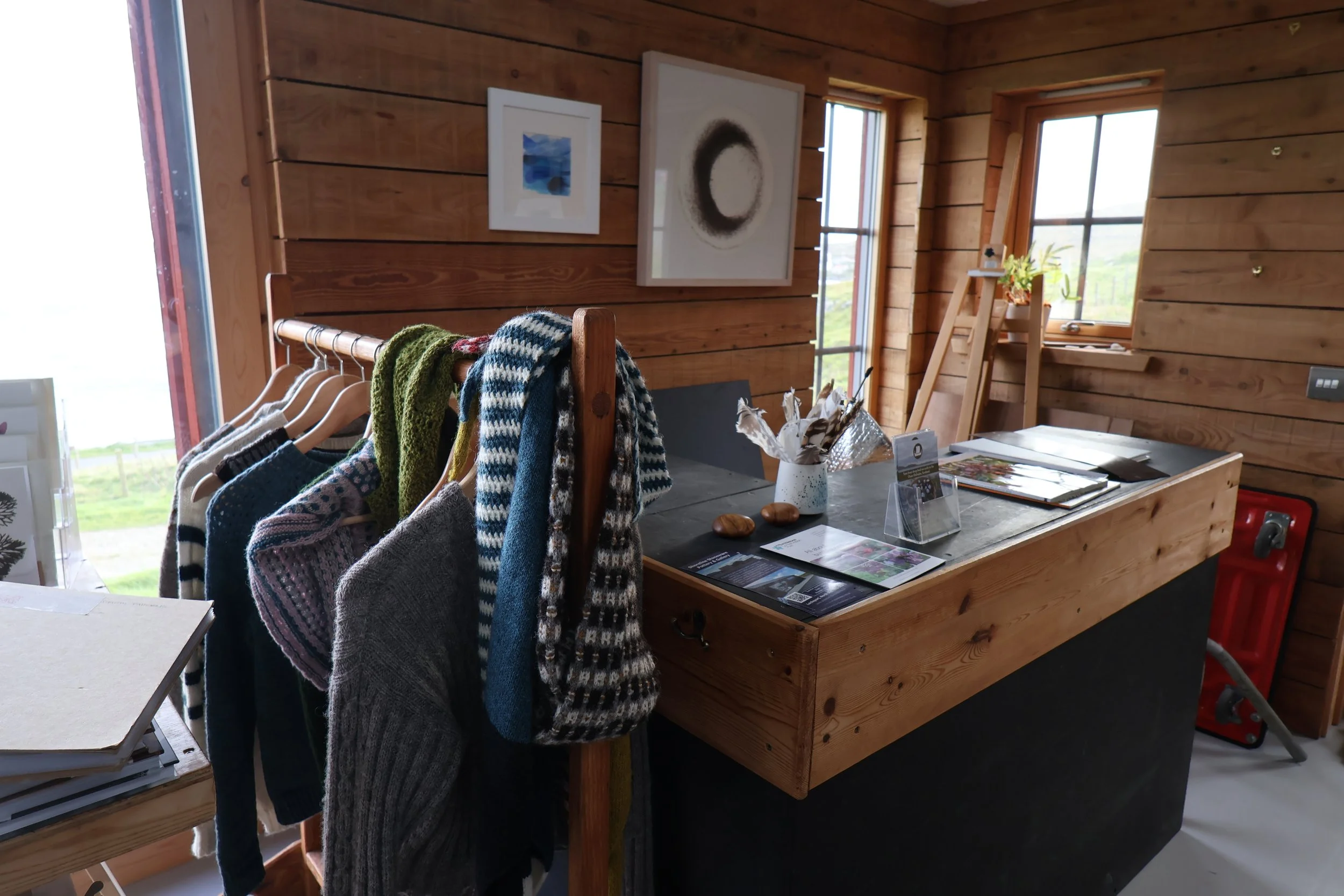
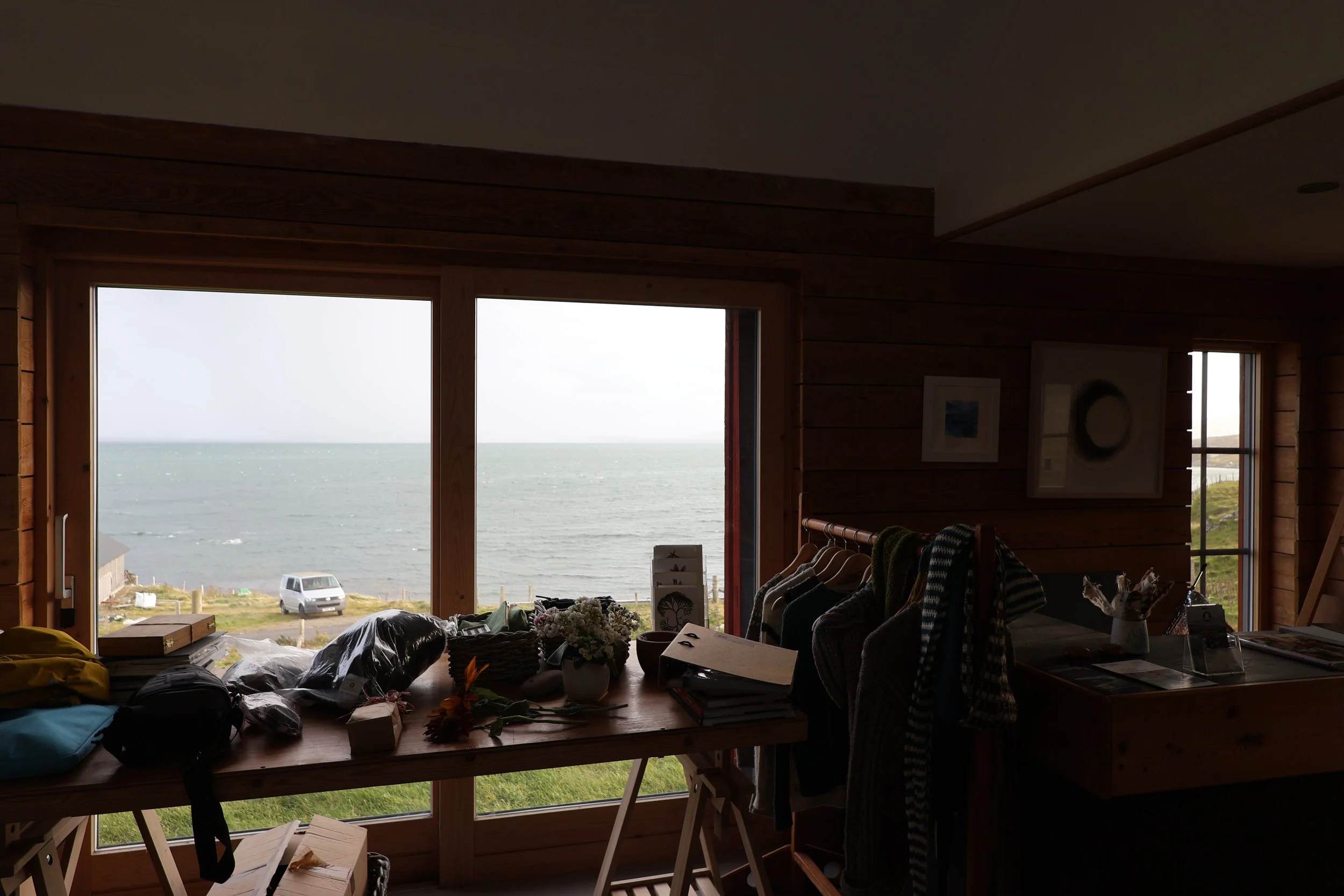
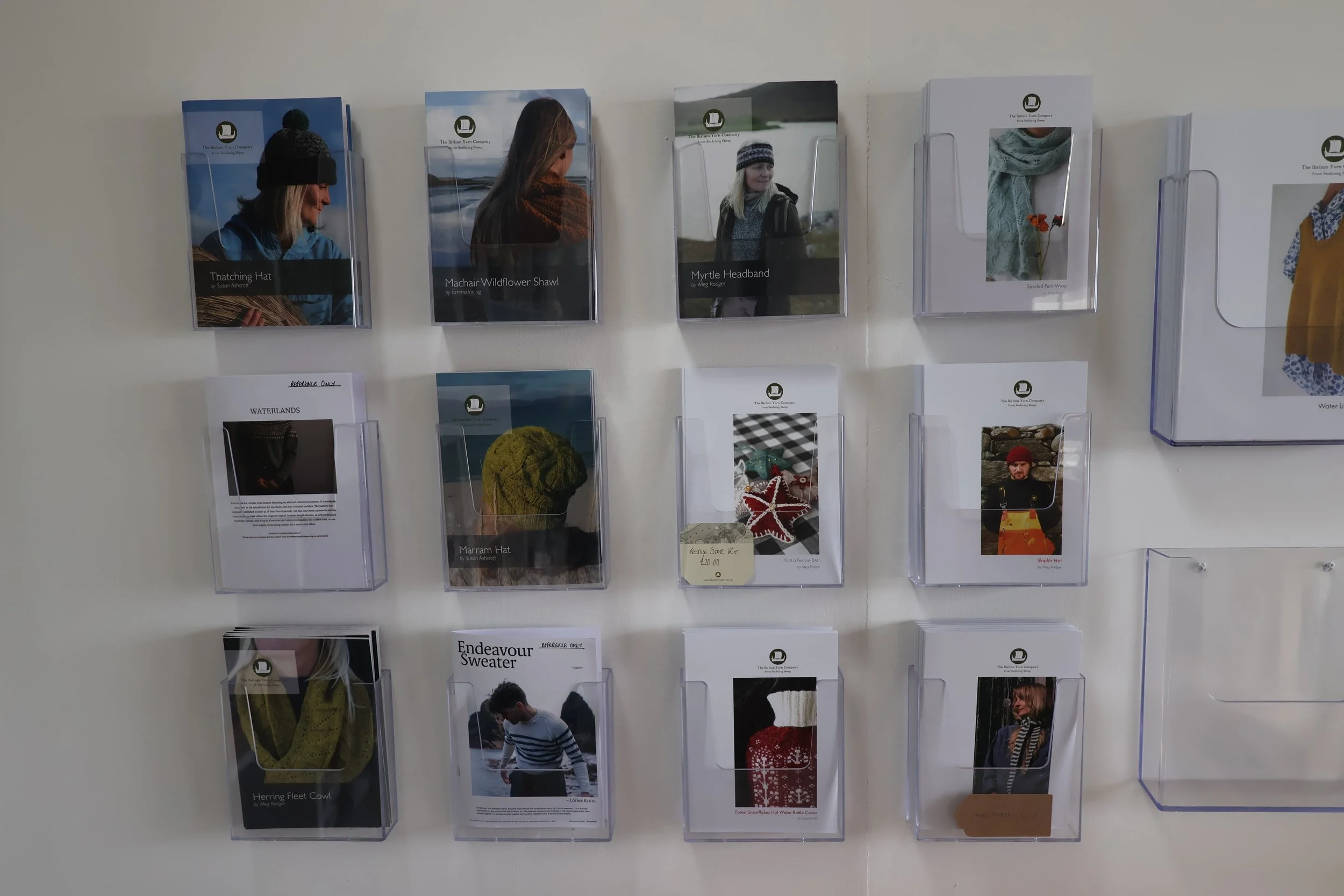
The contrast between the warmth of the studio and the wild weather outside was very special. Here was a material being created from this landscape and its animals, within a studio surrounded by the very environment that gives the yarn it's unique properties.
The visit offered me time to share thoughts and inspirations from the trip, hear about future plans from Birlinn Yarn, and reflect on the connection between local materials, makers and making.
Vist Birlinn Yarn website here.
Unfortunately, the changing weather meant that a visit to Uist Wool was not possible during this trip. Their yarns had played an important role in previous research in my honours project.
Uist Wool provides beautiful undyed yarns – using only the natural colour of the fleece not altered by dyeing. The range of natural shades they stock is just incredible, moving through soft creams, greys, browns and deeper tones, each reflecting the individual fleece from which it originates.
The team at Uist Wool has also been incredibly generous throughout my honours project, answering questions and offering support during the research for ‘In the Heather’. Although a studio visit was not possible this time, their work remains an important part of the wider exploration into Scottish wool and local material production.
Visit Uist Wool website here.
The Outer Hebrides offered far more than a collection of research visits. It was an opportunity to experience first-hand the relationship between landscape, material and making.
From the rhythmic movement of a Harris Tweed loom to naturally coloured fleeces, to workshops full of local material, there is a strong sense of place within the island’s textiles.
The landscape itself is layered – shaped by wind, rain, water, rock and vegetation, constantly changing with the movement of the weather… heather growing across the moors, sheep moving through the hills, the colours of the peatlands and waves breaking against the coastline.
This trip has provided me with a wealth of new insight into local textile making, natural materials and the landscapes that surround them. These observations will continue to inform my future work, carrying elements of the Outer Hebrides into new patterns, colours and forms.